El deleite es una experiencia humana subestimada. Quizás no le damos tiempo ni espacio para que se manifieste. Creo que San Juan de la Cruz escribía poesía desde su deleite en el Misterio inefable en él habitante, y con el fin de compartirlo.
A causa de ese deleite, y compartiendo algo de su deseo, les propongo estos versos, entrega del mismo Santo y de su interior tan bello, donde el Verbo moraba como amante en el amado.
+df
Acerca de la Santísima Trinidad. (Primera parte del Romance sobre el Evangelio «In principio erat Verbum»)
Una meditación sin puntuación solo espacios sobre el Nacimiento y el comodín en la baraja
Dulce ironía que un jefe de soldados le dijo a Jesús que tenía hombres bajo su autoridad y mostrándole la eficacia de su palabra diciendo le digo a uno que se vaya y se va a otro que venga y no tarda pues por buena voluntad lo dijo saludando la autoridad de la palabra que Jesús pronunciaba porque desde lejos corre veloz la voz de la palabra por ser la palabra generosa y gratuitamente enviada
bajo las órdenes viven los hombres aunque el poder darlas pueda intoxicar a quienes piensan el juicio reside en la voluntad sola sin saber y incontables césares han dado y dan órdenes a todo el mundo con dedos moviendo a gentes sobre mapas por una razón si no por otra y pues resulta que José salió con su esposa a empadronarse en tierras davídicas porque registros y números impuestos sostienen el movimiento del mundo y se pregunta uno si los impuestos los pagan los hijos o los extranjeros y si eso depende de quién somos hijos y a quiénes extranjeros pero guardamos eso para otro día ya que Dios sabe lo que hace aunque el César no para decirlo así y podríamos preguntar si los impuestos construyen calles y carreteras y sostienen las guerras o si las guerras y calles y carreteras se sostienen para imponer más impuestos ya que los hombres se mueven por alternos motivos
y nace el niño que es nuestro porque se dijo una vez que un hijo se nos ha dado aunque ser acompañado por bestias mansos no habíamos anticipado si no recordando aquella palabra que dibujó una escena donde el león comerá paja lo mismo que el buey no lejos de la cueva de la víbora donde meterá la mano el niño apenas destetado pero no quiero desviarme recordando sueños de ancianos apenas recuperados porque estaba hablando de los tejidos de calles y carreteras y guerras envolviendo mapas como espejos arrañados y como se insinúa la gracia en los mapas donde dedos no señalan porque ojos solo buscan lo que hombres desean y en eso domina lo que piensan todavía no poseído
oí decir una vez que el comodín en la baraja de la historia es el diablo quien aparece de vez en vez para complicar las cosas pero a veces pienso que esa víbora pasa su tiempo dando maestría a sus alumnos sobre la técnica del movimiento manipulado para alcanzar fines más o menos controlados y que esto es bien sabido aunque en su detalle poco reconocido predecible pero solo después en los discursos de los sentados y me causa pensar que Dios es el comodín en su propio jardín que por años se ve desgarrado pero de donde salen brotos de generosidad no anticipados con aquella gracia de libertad que no figura en los pasos calculados de los mejores alumnos de las escuelas de los fines controlados y que una inesperada palabra que ofrece un pesebre si no posada cambia el aire que respiran los hombres que con ansias suelen ser criados y la libertad de los generosos agarra vuelo cuando ofrece espacio al niño de quien procede todo generoso gesto y gratuita respaldada y no se olvide de los pañales que tal vez Isabel había tejido y regalado a María antes de que ese desvío se había anticipado.
TRYING TO SAY GOD: A meditative essay in three parts
June 22-24, 2017, I attended and gave the following plenary address at a gathering of Catholic writers and artists at the University of Notre Dame, under the auspices of the Institute for Scholarship in the Liberal Arts. The three day conference was entitled Trying to Say «God»: Reenchanting the Catholic Literary Imagination.
It was a grace to be in the company of such gifted presenters and participants. I learned a lot. +df
The Holy Trinity, Masaccio, c. 1426, Santa María Novella, Florence
TRYING TO SAY GOD
A meditative essay in three parts
I. THE POVERTY OF THE WORD
The WORD is our most constant and mysterious companion. In some way we come together during these days to celebrate the poverty of the WORD. And this in two principle senses. We rejoice in the poverty assumed by the WORD when he took flesh, and secondly we celebrate that poverty that shows itself both in what we can say and in what we cannot say of Him. For in “trying to say God” we encounter all of these poverties, and more. By his poverty we are made rich.(1)
The whole Christian life is a participation in the expressiveness of the WORD. That the Church by grace both engenders and needs artisans of words, painters, sculptors, musicians, and other sub-creators is akin to an evident truth that flows from revelation. Popes and bishops have written about it, and history testifies to it. I am not interested in mounting an effort to re-present in narrative fashion what the tradition has said before me. I wish to speak as a pastor who writes a bit, but reads more. And as a preacher who is often surprised after a homily that I said something I had never thought before.
In a certain way this or any discourse is an unveiling of the particular poverty of the speaker. I can only speak out of an impoverished particularity; this is not false humility, it is the metaphysical condition that we all share. We are embodied and therefore historical creatures. Each of us would describe our particularity differently. Mine begins with the fact that I spoke Spanish at my Grandmother’s knee, and spoke English to the television set. Then I went to school. The rest of the story is of occasional relevance and reflected in the footnotes. Paradoxically, I do not think many of us would trade our particular poverty for anything in the world; it is the indescribable richness through which the life of the WORD comes to us and in some way gets translated through us.
I do not doubt that a Catholic writer writes from poverty, in a labor that in the end is a response of love to the WORD who in his poverty has loved us. Exploring this conviction animates what I want to say today. In some way I wish to encourage you by depicting something of the mystery that envelops you as you write. And even if my words fall far short of their aim, there is, I hope, grace in leaving to silence what I cannot say.(2)
So, let us consider for a moment the root and promise of our poverty. Javier Sicilia, the Mexican poet/novelist/human rights activist describes this mystery of the poverty of the WORD made flesh in a novel he wrote a few years ago entitled La Confesión. Early in the novel a fairly impractical, not to say useless, priest is having an interview with his fairly powerful Cardinal Archbishop. No one reading in Mexico would doubt the realism of the dialogue between authority and poverty in the Church. Javier Sicilia’s vision of the poverty of Christ pulses through the novel and is here encapsulated in this fragment. It picks up with the priest speaking quietly while the Cardinal sips a tequila. My English translation cannot do justice to the beauty of this passage.
Do you know what amazes me about the Incarnation? I continued, that it is altogether contrary to the modern world: the presence of the infinite in the limits of the flesh, and the fight, the fight with no quarter, against the temptations of the devil’s excesses. You do not know how much I have meditated on the temptations in the desert. “Take up the power”, the devil told him; that power that gives the illusion of being able to disrupt and dominate everything. But he maintained himself in the limits of his own flesh, in his own poverty, in his own death, so poor, so miserable, so hard. Our age, nevertheless, showing a face of enormous kindness, has succumbed to those temptations. “They will be like gods, they will change the stones into bread, and they will dominate the world”… to such an age we have handed over the Christ, and we do not even realize it.(3)
Limitation is the world’s word for poverty. Perhaps we are quietly ashamed of our poverty, and so try to hide it. The world we live in strives to overcome our limitations, our poverty. Showing a face of enormous kindness we want to free ourselves and others from this poverty. In the midst of this comes the WORD enfleshed who seems to say to us that limitation is not the enemy. Now that is a jarring word, disconcerting and hardly tolerable to the logic of pervasive human wants. Perhaps today faith in the Christ finds its greatest obstacle in the unthinkable thought that God would renounce the power and accept to maintain himself in the limits of his own flesh, in his own poverty, in his own death, so poor, so miserable, so hard.
Much later in the novel, our fairly useless priest is visiting with an elderly religious sister with whom he shares an abiding friendship and hears her utter the following:
If misery exists, Father, and the statistics do not lie, it is because the dream of the rich has contaminated the dreams of the poor. At the bottom of things, poverty no longer exists, dear Father. The only thing that exists is wealth and misery, … Do you know why? I know well that you know … Because they have been made to believe that their poverty is a shameful disease, a wound unworthy of the world. Never before has humanity, and here, excuse me, Father, I also included our Holy Mother Church, spit so much on the face of Christ, as if his poverty were a filth, that unclean filth that they hung from the cross and which we, as did his detractors, make fun of.(4)
First I want to acknowledge the simple beauty of Sicilia’s use of language. Having said that, I would like to look at this from a couple of different angles. First, at its most obvious sense, Sicilia locates the denigration of the poor, and thus the denigration of the Christ, in the contaminating influence of the dream of the rich, which is in principle a kind of limitless possibility of possession, consumption and the overcoming of human limitation.
Laudato Sí makes the audacious, almost apocalyptic claim that we are witnessing the normalization of the notion that goodness and beauty are synonymous with utility. It’s an old human threat, but technical prowess and economic power make the grasping manipulation of ourselves, our neighbor and our surroundings monstrously achievable. The voracious advance of «this age of usage» makes human ecology increasingly hostile to humanity itself. The first sign of this hostility is the manipulation of the poor, who on Sicilia’s telling, are being made to feel shame while being sold a bill of goods. The second sign is the devastation of the natural ecology. We are deeply down this road. This limitless commodification of reality for purposes of provoking limitless consumptive desire makes dystopian fiction less and less a futuristic genre.
It appears we live in a time when words, like the human body itself, are displayed for the sole purpose of provoking consumptive desire. This aggressiveness holds powerful sway, and suggests that our cultural moment despairs that words, bodiliness, and the whole of material creation, in the end, matter much. We press into heartless service what we little value.
This state of affairs profoundly affects the life of a worker of words. Words are aimed at something more than provoking consumptive desire, just as embodied persons are more than objects of consumptive desire or objects within whom consumptive desire can be provoked. Surely the vocation of a Catholic writer involves contending today with the aggressive reduction of persons to objects, and our words to instruments of utilitarian provocation.
Our faith in the WORD made flesh both confirms and safeguards our fragile human intuition that every individual human life is a word that agonizes in the act of being spoken, and that this poor telling, so poor, so miserable, so hard, can be a speaking made beautiful by a love that envelops and seeks to saturate it.(5)
+++
Catholics who use words with creatively significant intentions seek to give expression to human life’s intelligible speaking, doing so in the abbreviated form of a story, a poem, a novel. The Fathers of the Church delighted in preaching the Incarnate WORD as both the bearer and the embodiment of all that the Father has to say to us. They spoke of him as the VERBUM breviatum.(6) The many words of the earlier covenants are more briefly assumed into the New; the Lord’s parables capture in the fragment the whole of the Gospel; the Lord’s Prayer conveys in just a few words the whole mystery of prayer. And finally, the person of Christ Himself, displayed in the act of giving Himself to the Father for our sakes, both shows and enacts what all his words to us intended to express. And so it is that the progressively abbreviated expression intensifies the visibility of the WORD. Is this not the promise contained in the poor human limit assumed by the WORD? Our embrace, then, of the WORD in his human particularity surely commits us to follow Him into the mystery of the limitation that signifies most intensely.
II. THE PROVOCATIONS OF THE WORD
Question 46, article 3 of the Tertia Pars: Thomas asks in what sense the Cross was necessary for our salvation. Such a beautiful few lines. Such a simple formulation, a fragment that in some way contains the whole.(7)
In the first place, man knows thereby how much God loves him, and is thereby stirred to love Him in return, and herein lies the perfection of human salvation; hence the Apostle says in Romans 5:8: God commends His charity towards us; for when as yet we were sinners . . . Christ died for us.(8)
Certainly the whole of the Summa is contained in these few lines, but that is far less important than the fact that the whole of the salvific drama is here simply expressed. God the Father shows himself in the act of manifesting the Crucified Son, and by the Spirit we both see and are made participating agents in the love there displayed. Here, Thomas expresses the VERBUM abreviatum of the New Testament revelation. Put another way he shows us in worded dramatic form the Trinitarian icon of the West; think of Masaccio’s three dimensional image of the Trinity painted in two dimensions. I think we must look at it together, not because we necessarily want to make it the subject of our next essay, poem or novel, but because how we see and respond to this dramatic display will profoundly affect how we write our next essay, poem or novel.
This iconic description is in fact the culmination of a contemplative biblicist’s perception of the dynamic of revelation. The drama of the Trinitarian icon in the form of the Crucified is thoroughly divine and uncompromisingly human. It pivots around three moments: the appearing, the provocative insight, and the response. In some sense the drama is in the perception, and in the interpretation of the provocative appearing. Yet the greater dramatic weight is in the character, quality and direction of the human response to this divine provocation.
Thomas alludes to the intrusive appearing of Christ in the citation of Romans 5: While we were yet sinners, Christ died for us. We were quite unprepared for this appearing. His arriving was not the descent of an invited guest, nor was he made all that welcome when at last he came. The time, place and manner of WORD’s manifestation was entirely hidden in the wise counsel of the Living God.
Thomas’ invocation of St Paul’s text serves to give authoritative characterization of the intrusion’s motive from God’s point of view. God appears as one commending, that is to say manifesting persuasively, his love for us. This is the divine eros, a dramatic move to show himself as he is, which is equivalent to showing himself in the act of love. The human drama, which is also a kind of eros, is entwined in the divine display and is simply captured by Thomas in the verbs he uses: cognoscit, provocatur and ad diligendum. We are intended to know something, to be provoked to something, and to respond in some way.
This provocative appearing is directed to our desire; it aims radically to divert our attention (which is always derivative of desire) away from what is normative for us to something new, something not derivative from our lived experience in the world. Jean-Luc Marion presses into service the word “anamorphosis” to describe this phenomenon.(9) This involves a jarring shift of perspective by which one sees, or at least glimpses, as God sees. Conversion precisely entails this radical re-visioning.
In keeping with plain Catholic doctrine this revising shift can only happen through the prior attractive grace present in the appearing itself: Ista attractio, ipsa est revelatio, as Saint Augustine says: This attraction is itself the revelation. Thus, divine love is both the revelation and embodies its own attractive force. It makes possible our free movement toward it and in it: Seduxisti me Domine, et seductus sum.(10)
The parables of the Kingdom can help us get a sense of the ista attractio. In the parables, the attractive character of the Kingdom is in the very proposing of a viewpoint other than our own. Often the arousal of desire for the Kingdom involves dramatic depiction of a viewpoint that sees what is missing. Thus the prodigal son saw something made present to his mind, and it told him what he was lacking, and this stirred him to return home. The widow saw what she no longer had, a silver coin, and it stirred her to search. The experience of what attracts to God can look quite bizarre to the casual observer. The clever steward who seems to scandalize the reader who only looks for moral lessons in the parables, knows his future hangs in the balance now that his master has decided to dismiss him. So he makes friends with the poor by, illegally perhaps, reducing their debts. The parable offends someone who expects the Lord only to show us ethics. It makes sense to one who perceives that his interest is in provoking us to see that the Kingdom involves an urgent desire to avoid disaster, and friendship with the poor is the surest way to proceed.
As readers I do not doubt that we have all had the experience of being attracted and moved to a perspectival shift of some kind. It seems to me most great literature aims to affect our seeing. I have on occasion been resistant to a book because the perspectival revision proposed struck me as too aggressive or in some way persuasive in a direction I did not want to pursue. Let me just say Interviewwith a Vampire was too successful in depicting the evil of draining someone’s life away as attractive. I never finished the book. Conversely, Jim Butcher’s Dresden Files fascinate me. I enjoy them, and though I am quite sure there is a perspectival shift being proposed, I have not sensed this to be problematic; quite the contrary.
My point, though, is that as readers we make decisions all the time about what authors are trying to show us, and how far we are willing to let them show it. This experience is analogous to the work of grace implied by the Trinitarian icon in its attractive phase. Either consciously or not, our writing will share in this analogous relation. And in principle our writing can be aligned in diverse ways with the icon’s attractive intent, even as the parables were.
Now then, faith’s character as an apprehended intuition, a gratuitously offered and accepted provocation to God’s point of view, forms the basis for the regenerative work of grace. By it we are made capable of responding. We rise, as it were, to the level of actual participation in the love revealed in the iconic drama.
It should be noted that this is exactly the point at which Catholic anthropology holds as paramount what later Reformation theologies will relegate to lesser importance. The response of love to the love offered is the salvific moment. Thus, Thomas says of the move to love God in return: herein lies the perfection of human salvation. For Thomas, stopping at the moment of insight into the meaning of the icon, equivalent to the act of faith, is a tragic failure. The insight of faith is stunted in its teleology if it does not trigger within us the infusion of charity that loves God in return. This responsiveness is directed to the poor Christ and by immediate extension to the neighbor. Lord, when did we feed you when you were hungry; when did we clothe you when you were naked?(11) This entire movement constitutes active, willed participation in God’s own love.
One of the remarkable aspects of Thomas’ account is how completely the divine / human drama is enveloped in charity. It is love which motivates the divine appearing; it is this love appearing which itself attracts us willingly into the altering of our gaze. And it is love generated by the grace of faith and given in response to God that perfects the salvific action. For Thomas, the intellect may be the highest human faculty, but salvation is in the will inasmuch as charity is the love we gracefully / humanly return.
To insist on the primacy of charity in the Christian life is to open up the enormous dramatic consequences of human agency which in its most pristine description is responsiveness to the gift of love. The response to the divine provocation can be immensely varied; to name a few, it can be sudden, subtle, lethargic or thwarted.(12) The parable of the sower is not unrelated to this aspect of a Catholic dramatic vision. Here it would be appropriate to say the word “hope”. Because of the obstacles human persons can encounter within this dramatic vista, hope emerges as the divinely sustained medium of life. The lethargic and the thwarted response need not remain so.
+++
Since the Incarnation something extraordinary has been unleashed upon the world: It is the irruption of grace in flesh. The visibility of the divine is a manifestation of the divine love, a God-desire to be seen as love in the midst of his creation. His appearing affects every aspect of human agency: the senses, the passions, the appetites, the intellect and the will. Human creativity cannot but be affected by being pulled into the divine expressive love. A Catholic writer contemplates this mystery and wonders how to extend the reach of its visibility.
I think of Bernanos’ book The Imposter. In it he carefully lays out the human contingencies that lead to the second volume, Joy. The drama of the appearing of grace and the drama of refusal emerge throughout these works in expressive elegance. At the end of the second book, we see the Imposter Cénabre struggling up a flight of stairs, and finally admitting that he must do what he alone cannot do, he says to the distraught cook: Will you kindly give me your hand,… I fear I cannot take a single step unassisted. And then the viewpoint shifts to the poor woman, chosen here to witness what his exhausted, surrendering flesh can only intimate:
She felt her arm seized with convulsive force. At once he began climbing the stairs, slowly, heavily, as though he were pushing a tremendous weight with his forehead. And when, after the door had been opened, the light struck his face, frozen in an anguish that was more than human, the poor woman, in spite of her terror, could not suppress a cry of pity.(13)
In my limited reading, this is one of the most expressive scenes in modern literature. Bernanos, whom I cite here in exemplary fashion, is surely among the great crafters of the story. He is a challenge for us, as are many Catholic authors of the last century. His work resonates beyond his time and place. Yet, it is not possible now for us to write as he did. This should not surprise us. After all, St Ignatius did what St Francis and St Dominic did without actually doing what they did. Bernanos wrote from the particular poverty of his moment, and from a contemplative stance before the poor Christ’s provocative appearing. To write as a Catholic is most properly to do just that. Our response will be different though, because, though the poor Christ is the same, our poverty before him now is different.
III. THE WORD AT THE EDGE
The jarring perspectival shift contained in the act of faith and responded to in charity in some way transposes the believer and turns the disguised divine appearing into the discernible and pervasive presence. We speak and write in the grace of this perspective. Herein lies the non-believers great frustration with us. To the tepid believer or to the non-believer, the tradition of literature forged within the Catholic anamorphosis is one of many strands within the larger historical categorization of artistic traditions and literary history. This tradition may or may not appear remarkable within this historicization. In fact contemporary literary criticism seems to have a vested interest in noting how it is quite unremarkable within the historical trajectory.
For many literary critics, a literature nourished by a dogmatic religious faith is but a phase that is bound to be superseded by our current happy progression into intellectually uncommitted status. This amorphous critical perspective, which is anything but happy, is actually a mix of hostile aversions to any claims about meaning in the world. Yet there is another way to read the history of literature. If the incarnation of the WORD is the intense-most signification of the love unseen behind all that is, then the rejection of this sign was bound to wind itself historically toward the current cultural fear that behind all that is, there is nothing at all. To say it this way puts in high relief where our current contentious edge lies.
Deconstruction is an apophaticism that cannot conceive of the WORD beyond human wordiness. As a philosophical, literary and cultural phenomenon it is a movement that sees meaning as a pure construction of the aggressive mind; meaning, thus, is something like a human institution. And like institutions, words must be shown for what they are when deconstructed: at root, for the deconstructionist culture, universal claims of meaning are idolatry, an aggressive kingdom that keeps its subjects within a controlled dominion. In that sense meaning is an extension of the human power-play. The Game of Thrones, whether conceived so or not, is a parable of deconstruction. This distrust of meaning is extended to the Church in a particularly intense way because she is perceived as the paramount institution that proposes meaning.(14)
Being an institution that is inherently protective of the claims of signification is not the real problem, though. The problem for us is construing the institution and the meanings without relation to their their original source and final end. The various versions of deconstruction admit of no such original source that lies behind and above both meanings and institutions, which is why their fruit is bleakness. We, in fact, do admit of this source, which is why the fruit of our labor should be hope.
For the Catholic the idolatry of worded meaning is a temptation, as is the rendering of Church in her temporal form as an absolute. In the case of the Church, her form derives from the Kingdom of the crucified and risen Christ, just as in apophaticism, meaning is derivative and relative to the WORD beyond human speaking. Temporal meanings and ecclesial forms are necessary for us as vehicles toward what they both sacramentally signify. Words and the Church house us in a forward moving fashion. Their form will give way when they have served their poor yet noble purpose.
Thomas says somewhere in De Veritate:
Whatever our understanding conceives of God falls short of his representation; and thus what he is always remains hidden from us; and this is the highest knowledge of him which we can have in this life, that we know God to be above all that which we think of him.(15)
Dante says what Thomas says about unsayability when he invents the verb “trasumanar” in order to say that to pass beyond the human cannot be signified through words.(16) Dante never tires of squeezing out of the language the outlines of a description molded to tell us what he cannot say, cannot remember, cannot describe.(17) Dante’s glorious failure in describing the Heavenly City, the Church in her transfigured form, should hold a privileged place in our literary and theological memory.(18)
If Dante breathed the air of the theological tradition that kept guard over the unsayability of the Godhead, it is because the Tradition held fast to something present in the Lord’s own announcement of the Kingdom. There is a kind of transgression, and indeed a kind of deconstruction that is built into the Gospel announcement itself. Every positive description of the Kingdom is at the same time a negation of what the figure of the world proposes as normative.
The Kingdom is not like the Rich Man’s table; it is like Lazarus’ vindication. The Kingdom is not about cultivating relations with people who can profit you, it’s about being good to people who cannot pay you back. The Kingdom is not like simply fulfilling the Law; it is like selling all you have and giving to the poor. The Kingdom is not like Pilate’s judgment seat; it is like Christ judged and giving taciturn witness to the truth. The transgressive character of the Lord’s announcement bears the marks of the WORD’s scourging of the form of the world as we know it. The face of that WORD appeared more clear to us when, in love, it was he who took the scourging.
In this sense, the perspectival shift to God’s point of view deconstructs any absolute claims in the world. The only absolute left is the forward moving imprint of divine love on the form of creation. It is the resurrection of the Christ tending us toward the Apocalypse. Both the Church and our words are at the service of this tending toward the wedding feast of the lamb. Thus, in Christianity, deconstruction is a radical purification that relativizes in order to save. If there is demolition, it is for the sake of uncovering the ground of love.(19)
It may be that the believer’s paradox of not being able to say God is met on the other side by the unbeliever’s paradox of not being able not to say God. I mean that the impulse toward signification is a drive in us more powerful than even the sexual drive. To be a true deconstructionist tending towards nihilism you have to constantly remind yourself that what you naturally seek, a meaning in things, is illusory. For a true nihilist to derive joy from something as simple as the sweep of words that lead us to see the eagles as they come for Frodo and Sam, Here at the end of all things, is akin to an act of infidelity to his professed first love. But such a one will repent of having been moved by the sense of the scene, lest others accuse him of having said God.(20)
But most people are not true nihilists, they are rather agnostics about the possibility of anything more than merely useful, and thus passing signification. And this practical agnosticism is born of having been schooled in a culture of distrust. In such a culture meaning is utilitarian and fleeting, and why it comes and why it leaves is lost to darkness. Our witness involves a befriending of the dark, not by taming it, but by listening to and speaking the WORD as he names himself from there.
+++
A Catholic writer lives and works at this edge of meaning, between light and the dark, and our witness emerges from that place. God is beyond our saying, but not beyond saying himself into us.(21) This is the source of our hope. With John of the Cross we intuit the difficulty and promise of hearing the Word in the dark: sin otra luz y guía / sino la que en el corazón ardía.
En la noche dichosa,
en secreto, que nadie me veía,
ni yo miraba cosa, sin otra luz y guía
sino la que en el corazón ardía.(22)
And with Hopkins we intuit both the difficulty and the promise inherent in speaking the WORD-Love. But we must in the end try to speak it: Caritas Christi urget nos.(23) Not as the world warily and wearily speaks it, but as the WORD irrupting in flesh spoke and speaks it. Behold, the master of the tides,.. the Ground of being and granite of it, the past all / Grasp God who has shown a mercy that outstrides. With the poets we must make the arduous journey and respond to Our passion-plungèd giant risen, / The Christ of the Father compassionate.
I admire thee, master of the tides,
Of the Yore-flood, of the year’s fall;
The recurb and the recovery of the gulf’s sides,
The girth of it and the wharf of it and the wall;
Staunching, quenching ocean of a motionable mind;
Ground of being, and granite of it: past all
Grasp God, throned behind
Death with a sovereignty that heeds but hides, bodes but abides;
With a mercy that outrides
The all of water, an ark
For the listener; for the lingerer with a love glides
Lower than death and the dark;
A vein for the visiting of the past-prayer, pent in prison,
The-last-breath penitent spirits—the uttermost mark
Our passion-plungèd giant risen,
The Christ of the Father compassionate, fetched in the storm of his strides.(24)
Thank you for your kind attention,
+df
—
NOTES
(1) 2 Cor 8,9.
(2) Javier Sicilia: La confesión: El diario de Esteban Martorus (Debolsillo, 2016, electronic format): pos. 704: Tal vez los lenguajes sean en realidad una cuerda de silencios cuyos nudos son las palabras. Para nosotros, los cristianos, el Verbo es el silencio coeterno que un día, por el silencio atento de María, se articuló en Jesús de Nazareth y nos echó a andar. El silencio permite que la palabra de otro se haga Él en nosotros.
(3) Javier Sicilia, La confesión, pos. 176: Sabe qué me maravilla de la encarnación? —continué—, que es todo lo contrario del mundo moderno: la presencia del infinito en los límites de la carne, y la lucha, la lucha sin cuartel, contra las tentaciones de las desmesuras del diablo. No sabe cuánto he meditado en las tentaciones del desierto. ”‘ Asume el poder’, le decía el diablo; ese poder que da la ilusión de trastocar y dominar todo. Pero él se mantuvo en los límites de su propia carne, en su propia pobreza, en su propia muerte, tan pobre, tan miserable, tan dura. Nuestra época, sin embargo, bajo el rostro de una enorme bondad, ha sucumbido a esas tentaciones. ‘Serán como dioses, cambiarán las piedras en panes, dominarán el mundo’… A ella le hemos entregado a Cristo y no nos damos cuenta.
(4) Javier Sicilia, La confesión, pos. 1669: Si la miseria existe y las estadísticas no mienten es porque el sueño de los ricos ha contaminado los sueños de los pobres. En el fondo ya no existela pobreza, querido padre. Lo único que existe es la riqueza y la miseria,.. ¿Sabe por qué? Sé bien que lo sabe,… Porque se les ha hecho creer que su pobreza es una enfermedad vergonzosa, una llaga indigna del mundo. ”Nunca la humanidad, y aquí, discúlpeme, padre, incluyo también a nuestra Santa Madre, había escupido tanto sobre el rostro de Cristo, como si su pobreza se tratara de una porquería, de esa inmunda porquería que colgaron de la cruz y de la cual, como lo hicieron sus detractores, nos burlamos.
(5) Ratzinger, “La Belleza” in La Belleza, La Iglesia (Ediciones Encuentro, 2006, electronic format) pos. 93: Quien cree en Dios, en el Dios que se ha manifestado precisamente en los semblantes alterados de Cristo crucificado como amor «hasta el fin» (Jn 13,1), sabe que la belleza es verdad y que la verdad es belleza, pero en Cristo sufriente aprende también que la belleza de la verdad implica ofensa, dolor y, sí, también el oscuro misterio de la muerte, que sólo se puede encontrar en la aceptación del dolor, y no en su rechazo.
(6) See St. Cyprian of Carthage, De Dominica Oratione, 28-30. A common and fruitful consideration in the Latin Middle Ages, drawing from Isaiah 10, 23 and Romans 9, 28.
(7) Bruno Forte, The Portal of Beauty, Towards a Theology of Aesthetics, (Eerdmans, 2008, electronic format), Chapter Two: “The Word of Beauty, Thomas Aquinas”: The Whole has made its home in the fragment because the relationship of love which constitutes it as purest beginning of all that is has now offered itself in the flesh: beauty is the arche of the Three, revealed in its highest form at the hour of the abandonment of the Cross, where the suffering of the crucified God opens the way into the depths of divine communion.
(8) Summa Theologiae, III, 46, 3, c.: Primo enim, per hoc homo cognoscit quantum Deus hominem diligat, et per hoc provocatur ad eum diligendum, in quo perfectio humanae salutis consistit. Unde apostolus dicit, Rom. V, commendat suam caritatem Deus in nobis, quoniam, cum inimici essemus, Christus pro nobis mortuus est.
(9) Jean-Luc Marion, Givenness and Revelation, translated by Stephen Lewis (Oxford University Press, 2016), p 64: In order to see the uncovered mystērion, it is thus necessary to pass from our spirit to the Spirit of God, so as to see it as God sees it. This is nothing less than an overturning of intentionality: taking the intentional gaze of God on God, instead of claiming to retain our intentionality in front of the intuition of the mystērion. I have identified elsewhere this overturning or transferal of intentionality as an anamorphosis.
(10) Jeremiah 20, 7.
(11) See Mt 25. and Summa Theologiae II-II, 27, 8, c., where St Thomas cites 1 Jn 4, 21, on this point: “this commandment we have from God, that he, who loveth God, love also his brother».
(12) Marion, Givenness, 48: Revelation consists only in the attraction by the Father toward the Son, in order to see the Father in him: “Ista revelatio, ipsa est attractio”. Whether this attraction is felt as gentle or violent changes nothing: revelation exerts these two effects, simply because it brings itself to bear. We believe in God when we will it, clearly; but we will it only when we love that which we desire;..
(13) Bernanos, Joy, (Pantheon Books, 1946): The final chapter. La Joie (Édition du groupe, Ebooks libres et gratuits) 1929 edition, p 236: -Ayez donc la bonté de me donner la main, dit Cénabre. Je crains de ne pouvoir faire un seul pas. / Elle se sentit saisir le bras avec une force convulsive. Aussi- tôt il se mit à monter à ses côtés, lentement, pesamment, comme s’il eût repoussé du front, à grand-peine, un poids im- mense. Et lorsque, la porte ouverte de nouveau, la lumière vint frapper ce visage pétrifié par une anxiété plus qu’humaine, si grande que fût la terreur de la pauvre fille, elle ne retint pas un cri de pitié.
(14) Pope Benedict, writing about 15 years before his election, identified with characteristic succinctness an important aspect of the current situation faced by the Church: For the great part of the people, the discontent with the Church has its origin in the fact that it is an institution like so many others, and as such, it limits my freedom. […] The anger against the Church or the disappointment that it provokes, have a specific character, because from her is expected, quietly, more than is expected from other mundane institutions. Ratzinger, “La Iglesia”: in La Belleza, La Iglesia (Ediciones Encuentro, 2006, electronic format) pos. 204: Para la mayor parte de la gente, el descontento frente a la Iglesia tiene su origen en que es una institución como tantas otras y que, como tal, limita mi libertad. […] La ira contra la Iglesia o la desilusión que provoca tienen un carácter específico, porque de ella se espera, calladamente, más de lo que se espera de otras instituciones mundanas.
(15) De veritate 2, i, ad 9m: Quidquid intellectus noster de Deo concipit, est deficiens a repraesentatione eius; et ideo quid est ipsius Dei semper nobis occultum remanet; et haec est summa cognitio quam de ipso in statu viae habere possumus, ut cognoscamus Deum esse supra omne id quod cogitamus de eo.
(16) Paradiso I, 70-1: ‘Trasumanar significar per verba / non si poría’ (‘ Transhumanizing cannot be signified in words’.) See William Franke, Dante and the Sense of Trsnsgression,(Bloomsbury, 2013, electronic format), pg. 8.
(17) William Franke, Dante, pg. 52: It is through resolutely transgressing every order of presentation and representation that Dante finally delivers his divine vision. Most deeply understood, it is a non-vision –which, nevertheless, in its very forgetfulness casts a shadow of infinitely rich and nuanced images that are glimpsed in the act of disappearing.
(18) William Frankie, Dante, pg 84: Dante, too, develops a poetics of failure in order not so much to deliver his final vision as to describe the impediments to his doing so. Paradoxically, the tale of his failure becomes his success, and he too sojourns indefinitely among the dead in the poem which survives him.
(19) As Thomas Pfau (Minding the Modern, University of Notre Dame Press, 2013) says of “modernity’s leading paradigm of knowledge”, almost in passing: “Plato (as indeed Coleridge himself) might have simply called it a philosophy that no longer offers a conceptual or imaginative space for love—which might itself be the most salient characteristic of philosophical modernity.”
(20) JRR Tolkien, The Lord of the Rings (Harper-Collins e-books), Bk 6, Ch 4, The Field of Cormallen: ‘I am glad that you are here with me,’ said Frodo. ‘Here at the end of all things, Sam.’ ‘Yes, I am with you, Master,’ said Sam, laying Frodo’s wounded hand gently to his breast. ‘And you’re with me. And the journey’s finished. But after coming all that way I don’t want to give up yet. It’s not like me, somehow, if you understand.’
(21) See Summa Theologiae, I, 43, 5, ad 2, where Thomas cites Augustine (De Trin. iv, 20): The Son is sent, whenever He is known and perceived by anyone. / […] Et ideo signanter dicit Augustinus quod filius mittitur, cum a quoquam cognoscitur atque percipitur. De Trinitate iv, 20 is cited frequently in I, 43.
(22) San Juan de la Cruz, Noche Oscura, v. 3: On the blessed night, / in secret, that nobody saw me, / nor did I anything see, / without any light and guide / except the one burning within me.
(23) 2 Cor 5:14: The love of Christ compels us.
(24) Gerard Manley Hopkins, The Wreck of the Deutschland, stanzas 32, 33. I am indebted to Ron Hanson for his novel Exiles (Farrar, Straus and Giroux, 2008) for a deeper, more humane, appreciation of Hopkins’ work
Solemnity of the Immaculate Conception, Cathedral of the Immaculate Conception, BrownsvilleTX, Homily -The holiness of the one “Full of Grace”: from the Lamb of God and for our sakes -La santidad de la “Llena de Gracia”: del Cordero de Dios y por nosotros.https://t.co/r7biJonuOk
Our Lady of Guadalupe, Homily. Noon Mass, IC Cathedral -El misterio de Guadalupe: anuncio y presencia recapitulados en nuestras tierras. -The mystery of Guadalupe: announcement and presence recapitulated in our lands. https://t.co/8DFU1fe26y
I gave the following lecture (really a series of meditations) on October 18, 2016 at the University of Notre Dame on the occasion of a Pastoral Symposium sponsored by the United States Conference of Catholic Bishops, designed to help bishops reflect and pray about the topic of «Reclaiming the Church for the Catholic Imagination». Bishops do not have many occasions to think aloud about the challenges the Church faces in our time. My thanks to Dr. John Cavadini and his associates at the McGrathInstitute for Church Life for organizing this occasion.
+++
Saint Dominic Adoring the Crucified Fra Angelico, c. 1442, Convento di San Marco, Florence
Belonging to the Crucified: The Beauty of the Church in Image and Reality
To talk about the Church is dangerous for us. I mean, we are not the announcement, God the Most Holy Trinity, revealed in the act of saving us, is. The Father’s mercy offered us is in Christ Jesus and is made actual by the Spirit he pours out abundantly. As Saint Thomas, commenting on the poured out rivers of wisdom referenced in Ecclesiasticus 24, says beautifully in one place:
I understand these overflowing rivers to be the eternal processions, by which the Son from the Father, and the Holy Spirit from each, proceed in an ineffable way, […] Comes now the Son and the enclosed rivers in a certain way overflowed by his making known the name of the Trinity.(1)
Primarily the New Testament is the state of one who lives the grace of this Trinitarian overflowing. Only secondarily is it a series of books. The inspired texts are at the service of the renewing grace. The Son’s embrace of us, when accepted in faith, saves us by engendering the outpouring of the Holy Spirit who enacts the life, communion and mission of the Son in us.(2) The Spirit thus makes us instruments of the Kingdom’s coming even as he prepares a place for us in the Father’s Kingdom come to fullness.(3) To this renewal Saint Thomas bears theological witness and summarizes the Tradition East and West. This, too, is a kind of overflowing river.
The Church is the historical body constituted by this dynamic. She is endowed with gifts and graces that enhance her joy at being called into Trinitarian life, and that aim at advancing the universal call to the nations. Hence, though the Church is not the message, she is essential to the economy of salvation. She is not an afterthought. Yet, we have to grasp her beauty by a kind of side-ways glance. She is known in the act of her being. She is known in the act of imparting the Trinitarian participation, itself identical with what the Lord offers by saying:
This is the time of fulfillment. The kingdom of God is at hand. Repent, and believe in the gospel (Mk1:15).
Part of what preoccupies us today is the difficulty we encounter in trying to convey to the generations entrusted to our care the beauty and joy of this life we have received. In large measure that is why we are dedicating these days to prayer and theological reflection. What I offer this evening is conceived as a side-ways glance; it is more a series of meditations than a lecture; more examination of conscience than prescription. If the examination of conscience part helps you, all the better, but I mostly aim that part at myself.
I.CONFIRMATION
We spend an awful lot of time as bishops confirming people in the faith, yet bishops and theologians talk and write very little about this pivotal moment and gift. It is the personal consummation of the Trinitarian enactment I just described; it is Pentecost applied, and thus the completion of the Paschal grace of the Risen Christ given to a Christian. It solidifies and missionizes our being in the Church. I speak to Confirmation candidates mostly about this gift as one that enables them to take up the mission of Jesus and thus bear witness to the Kingdom. By a kind of pastoral spontaneity, I find myself talking about this by describing how the Kingdom is decidedly different from what we encounter every day.
At some point in my confirmation homily I draw an explicit comparison between the Kingdom Jesus announced and ushered in– the very same Kingdom that the Spirit comes to make real in our lives– with the spirit of the world. I do not often call it the spirit of the world, since I am not sure 15 year olds know quite what to make of such a phrase. Instead, I talk about the obsession the world seems to have with power, money and control. For a while I used TheHunger Games to help them picture the point. Saying something like “life is not supposed to be The Hunger Games”. For the most part they have either read the books, or seen the movies, and so they tend to “get” that the fear that dominates the young people in those stories is not what Jesus and the Spirit, and the Church are about. I suspect they follow me in the Jesus and the Spirit part, but have not really thought of the Church as somehow connected to the offer of something that is described to them as “not The Hunger Games”. My pastoral gut tells me they do not react negatively to my drawing the Church into the vision I am trying to depict; rather, I suspect that they never really have pictured it before. In some sense, this may be what our conference over the next couple of days is about.
Quite by accident, if you believe in such things, during a confirmation last year, I didn’t say The Hunger Games, rather, I misspoke and said “life is not supposed to be The Game of Thrones”. The line drew a few giggles from the candidates, and a gasp from a parent or two. This made me think that the candidates knew exactly what I was talking about, and maybe their familiarity with it was not always with parents’ permission. But that is the world our families live in. Well, instead of correcting myself, I decided to run with the misspeaking, and mentioned that I have not watched the HBO series, though I have read the books. I made them laugh when I said: Do you know how hard it is to read a book and close your eyes at the same time? I mean, you know, there is some pretty ugly stuff in those books: ambition, treachery, murder, maiming, the good guys get beheaded, and the bad guys sit on thrones, and then they get beheaded; and those are in the happy parts.
Well, I have taken to using The Game of Thrones reference more regularly, since I think it makes the point as effectively as a reference to The Hunger Games. Teenagers and adults are fascinated by the gruesome display of how power, wealth and control swirl in dark configurations in this fictional world. It is both attractive and repulsive to them. Perhaps the popularity has to do with the fact that a great many people imagine that, once you take away the smoke and mirrors, the world actually operates this way. The popularity of dystopian fiction, which is never far from apocalyptic themes, should tell us something; and its popularity with the young is particularly significant. What is striking to me is that The Game of Thrones actually does hit the nail on the head with regard to saying something about the difference between what people experience and the Kingdom. This is of course my point in drawing the comparison.
The world tends to want to get rid of its problems, I tell the teenagers at Confirmation, and Jesus was a problem it tried to get rid of. He rose. This is the hope of the Church in the face of the ugly display of death’s cruel dance. The beauty of Christ risen in the flesh from the dead, though, is inherently difficult for us to picture or describe. I ask the candidates to witness to it by not letting life become a game of any kind. Christ is risen, and his victory is projected into the world by showing the fruit of his victory. This is the work of the Spirit. As Saint Athanasius said, a Christian’s ability to trample the menace of death is the sign of his rising; for a dead man cannot inspire such things.(4)
II.THE BEAUTIFUL AND THE UGLY
Saint Bonaventure, The Mind’s Road to God:
The mirror offered by the outside world is of little or no value, if the mirror of the mind be not made clear and polished. Train yourself, therefore, O man of God, by first heeding the biting sting of conscience before you lift up your eyes to the shining rays of wisdom reflected in those mirrors, lest from such radiant reflections you fall into a deeper darkness.(5)
There’s a lot of ugly stuff in the world, I tell the Confirmation candidates. I think when we draw peoples’ attention to this, be they teenagers or adults, they get what we are talking about. I think they get it more readily that way than if we say there is a lot of bad stuff, or if we say there are a lot of lies in the world. It is a risky strategy, because the apprehension of the beautiful has as much to do with the state of the soul as it does with the form of the object. Bonaventure says as much in the text I just cited. Still, I think we can trust the fact that human nature’s apprehensive capacities were not completely lost in the fall, nor washed away by the flood. People trust their gut more when it comes to the beautiful than they do when it comes to the good and the true. As Walker Percy might say, as a society we have surrendered judgments about the true and the good to the experts.(6) I do not think ordinary folks have yet similarly surrendered judgments about the beautiful. This is why I guess Walker Percy focused on story-telling. And certainly Tolkien trusted a great deal in a reader’s capacity to respond spontaneously to the noble and the beautiful.
It is the metaphysical irony of a fallen world, though, that it is easier to make the ugly fascinatingly attractive than it is to depict the beautiful as conducive to joy. This is a phenomenon at least partially operative in much dystopian fiction. It is also a phenomenon more easily observed than analyzed. In any case it may help account for the economic success of The Game of Thrones franchise.
The human being looks at an ugly world and begins to falter: maybe the ugly triumphs over our noble and beautiful dreams. As Pope Benedict put it: maybe the beautiful is the illusion, and the ugly is what is most real.(7) This uncertainty is a kind of darkness, perhaps the most obscure darkness possible. To abandon hope in the triumph of the beautiful over the ugly is another way to describe what we mean by the word «despair».
Hope requires the recognition of a good that can be obtained despite formidable obstacles. If the truth is that there is no way out of the triumph of the ugly, than there is no stomach for putting up a fight against it. The fear of the Nothing, like an aggressive entity, destroys hope. (7a) In the field of contemporary philosophy this is a contest fought on the terrain of the radical deconstruction of meaning. I need not go there now; it is enough to recognize its shadowy presence lurking in the background of pastoral aesthetics.
All of this would be a mildly inviting topic for academic discussion were it not for the fact that it is a life and death matter. I see it mostly in the young. The triumph of the ugly is an option a teenager learns about quickly. Gangs and a culture of violence are about power made glamorous. Drugs, alcohol and pornography are about an escape culture made to appear preferable to reality; and the drug and human trafficking trade is about a wealth culture that visualizes people only as buyers, sellers and commodities. The ugly will not triumph in the end, — he rose— but it can triumph in the soul of a young person to the extent that it can block out anything truly luminous. In that way it engenders despair, the soul’s submission to the triumph of the ugly.
A soul tutored in grace knows that beauty is not understood only under a physical aspect; but many people do not see it this way. As the Colombian writer William Ospina once said: when it comes time to show forth the world, art demands realism not reality.(8) With this phrase the poet wanted to say that art has a responsibility to point towards the marvelous in life, often present at the periphery of human perception, where the eye of the soul can perceive the noble present even in an ugly reality. An artist lives to point towards perceptible realities that exist at the periphery of what is physically expressive.
In its greatness the beautiful invites us to gaze on a truth pointed to by the image. Realism can trace and image something beyond the immediately sensed reality. Thus, for the Catholic imagination, the reality in our realm can be made to bear witness to the reality of another realm. Saint Bonaventure’s metaphysics of resemblance, intensely at work in The Mind’s Road to God, locates the ability to perceive these traces and images within the renewal of grace. For Bonaventure, Saint Francis is an icon of Christ precisely because he was pulled into total conformity and resemblance, even unto bearing the marks of the Crucified. I think, for example, we misread Pope Francis on the poor, and on creation, if we neglect the contemplative hermeneutic of graced resemblance and perception initiated in the Franciscan tradition, particularly in the theology of Bonaventure.
It is good to recall that before anything else, people bear the image and likeness. We are the first subjects capable of bearing the graced resemblance. And secondarily, because all artistic representations are uttered in some way by people, painting and music, preaching, poetry and other types of discourse can also participate in the hermeneutic of graced resemblance. From this perspective we understand better that announcing and contemplating the image of Christ and his Church is a concern that involves reflection upon the interplay between the ugly and the beautiful first in human beings, and then in all modes of human expression.
III.BEAUTY AT THE EDGES
Pope Benedict XVI, who knows a thing or two about the vision of Saint Bonaventure, speaking about two years before his election:
The one who believes in God, in the God who has manifested himself precisely in the altered countenance of Christ Crucified as the love that is faithful “to the end” (Jn 13,1), knows that beauty is truth and that truth is beauty, but in the suffering Christ he learns also that the beauty of the truth implies an offense, a sorrow and, yes, also the dark mystery of death, that can only be encountered in the acceptance of the sorrow, and not in its rejection.(9)
Pope Benedict, gathering up a tradition of Catholic reflection on beauty, points us to Christ Crucified. There are few examples of cruelty and ugliness that could be compared to crucifixion. The ugly exists; a Christian neither wants nor can deny this. But the image of the Crucified in human flesh invites us to perceive the reality that lies beneath the image, and that radiates a luminosity perceptible even in the midst of the cruelty of the Cross.
The Crucified invites us to contemplate the truth of love. And because God embraced the human being precisely when he accepted to suffer and die by what is ugliest in our condition, the Cross of Christ shows us that love transfigures. Charity specifies the image, gives it clarity and thus makes it capable of signifying beyond itself.(10)
Bruno Forte thus writes:
The Whole has made its home in the fragment because the relationship of love which constitutes it as purest beginning of all that is has now offered itself in the flesh: beauty is the arche of the Three, revealed in its highest form at the hour of the abandonment of the Cross, where the suffering of the crucified God opens the way into the depths of divine communion.(11)
Javier Sicilia, the Mexican poet/novelist/human rights activist, describes this mystery of the Whole of love made present in the limited, crucified fragment in more dramatic terms:
Do you know what amazes me about the Incarnation? I continued, that it is altogether contrary to the modern world: the presence of the infinite in the limits of the flesh, and the fight, the fight with no quarter, against the temptations of the devil’s excesses. You do not know, Eminence, how much I have meditated on the temptations in the desert. “Take up the power”, the devil told him; that power that gives the illusion of being able to disrupt and dominate everything. But he maintained himself in the limits of his own flesh, in his own poverty, in his own death, so poor, so miserable, so hard. Our age, nevertheless, showing a face of enormous kindness, has succumbed to those temptations. “They will be like gods, they will change the stones into bread, and they will dominate the world”… to such an age we have handed over the Christ, and we do not even realize it.(12)
This crucified love initiates the drama of the Kingdom; quite simply, the choice before the world is between the way of seeking power to overcome all limits, or the way of love shining in the beauty of the limited fragment: so poor, so miserable, so hard.
The beauty of the truth implies offense, Cardinal Ratzinger said. This is not far from what Pope Francis means when he talks about the imperative of the Church’s identification with the poor and relegated. The realism of the Cross, the element that causes offense, is the same vision that sees the embrace of the poor as not just part of the program of the Church, but the heart of her basic identity. It is her reality that is itself the beautiful image, beautiful in the manner of the altered countenance of Christ Crucified. This beauty gives offense. Christ Crucified and the poor are at the periphery of the soul’s perception precisely because they are at the periphery of the world’s stage.
Pope Francis says in Evangelii Gaudium 198:
This option for the poor, as Pope Benedict XVI taught, “is implicit in the Christological faith in that God that has made himself poor for us, so as to make us rich by his poverty”. That is why I want a poor Church for the poor.(13)
To embrace the world’s rejected is to embrace the way of beauty and to reject the way of power. As such, the Church refuses to separate the Crucified from the world’s poor. By the poor, I mean what I take Pope Francis to mean, namely all the “not-beautiful”, “not-useful”, “not-acceptable” persons the world summarily ignores, manipulates, ostracizes, uses and then throws away. Most dramatically, these are the ones whom the world seeks in order to sell their unborn or immigrant body-parts. The world eats its own, in a grotesque and hellish effort to live beyond its limits. The condition of the Crucified is the condition of the poor, the ones sold and used.
A Catholic imagination drags the periphery to the center, so as to make us able to perceive the truth that the center by itself eclipses. This implies offense to the world because in this way the Church lifts up what the world considers ugly and embraces it as beautiful. The saints know this by instinct of grace. The image of Mother Teresa, and all who are like her, holding a dying baby born in poverty is the image of the Church whose center is made beautiful by the embrace of the periphery.
To present the beauty of the Church in this way is both to offend the world and to unleash, so to speak, the grace that acts in prevenient fashion. This is the grace that insinuates itself in what is left of the natural apprehensive abilities of the human soul. Such images speak to the secular world more powerfully than we know, or than the world will publicly admit.
IV.CONTEMPLATION AND PERCEIVING THE KINGDOM
Pope Francis in Evangelium Gaudium, number 264:
The greatest motivation for communicating the Gospel is to contemplate it with love, to linger over its pages and to read it with the heart. If we approach it in this way, its beauty surprises us, and returns to captivate us over and over again. For this it is urgent to recover the contemplative spirit that permits us to rediscover each day that we are depositaries of a good that humanizes, and that helps to live a new life. There is nothing better to hand on to others.(14)
The Holy Father would have us contemplate the contours of the Gospel frequently, and allow ourselves to be captured anew by its beauty. It would be a mistake, though, to think of this kind of contemplation as a perceptive grace focused primarily on glimpsing the timeless element in it. It is true that Thomistic descriptions of the move from meditation to contemplation emphasize the move from the contingent to the necessary, the particular to the universal.(15) This has to do with the order of being, since the end of eternal contemplation is the standard by which lesser contemplations are measured.
Still, this theological truth must be seen in context of Thomas’ insistence that the mixed life is the highest form of life available to us; it is patterned after the form of the Lord’s own way of life, contemplative surely, but active also, and most of all accessible.(16) Glimpses of the timeless are ever present in the Gospel. The Iconic tradition of the East wondrously pulls us into this perception. But the eternal in the text is distorted for us unless we remember that our being pulled upward is simultaneous to eternity’s moving downward into our realm, in dramatic and apocalyptic fashion. Somehow it is necessary to capture in contemplative ways something of this drama as well, as it forms part of its essential beauty and power to attract.
The artistic tradition of the West has for some reason of providence dwelt on this depiction of the action in the Gospel. From Caravaggio’s Deposition to Flannery O’Connor showing us an abandoned soul in a puddle of water, wrapped in wire, it is the drama of the act that communicates. Such representations project what it looks like for us to act in likeness to the Lord.
The Kingdom Jesus announces is abrupt and not easily imagined. But He spared nothing to help us picture it. The parables are depictions of grace in motion. When you think about it, grace can only be conceived as a movement. And as with all movements, it has a beginning, a middle and an end. The parable of the Prodigal Son is all the more dramatic for our not being told what the older son will do after his Father’s pleading. The parables are infinitely nuanced, with that human nuance that escapes the learned and the clever (and many a scripture scholar), but which delights and instructs the crowds.
A preacher struggles to find the images that can convey something of the Kingdom’s grandeur, its majesty, its promise. The challenge is closely related to the theological aesthetic I have been talking about. For indeed, a great deal of the Lord’s preaching of the Kingdom centered on what lies at the edge of human perception.
In his announcement of the Kingdom, the image speaks more efficaciously than does the theological statement. In searching for a language to describe this mystery, I find myself either focusing upon what the Kingdom is not: The kingdom is not like The Game of Thrones. Or I find myself trying to derive similitudes that remain close in form to those used by the Lord himself: the Kingdom of God is like the Rio Grande River.
When outside my diocese, I am frequently asked: where exactly is Brownsville? I have taken to giving the same answer: Brownsville is there where the Río Grande River gives up its life in the Gulf of Mexico, yet is never exhausted. I like this description because it turns the mind to the great mystery at the center of the Kingdom announced by the Lord: If you would have life, you must lose itor give it over. Even nature reflects this mystery in the way the River first touches then gives itself to the Gulf. The Kingdom is like that. It is a stretching toward another that simultaneously is a pouring out and being full. In so many different ways, throughout his public preaching, the Lord spoke of this. The Kingdom comes to birth in the pouring out that fulfills, the self-emptying that like the grain of wheat, dies and bears much fruit.
Christian contemplation glimpses the self-emptying of the Son as the movement of a moment in time that by a sideways glance shows us eternity’s ceaseless pouring forth. Its beauty in time and in eternity is charity.
V.THE KINGDOM AS TRANSGRESSION
Thomas says somewhere in De Veritate:
Whatever our understanding conceives of God falls short of his representation; and thus what he is always remains hidden from us; and this is the highest knowledge of him which we can have in this life, that we know God to be above all that which we think of him.(17)
William Franke wrote a fine book entitled Dante and the Sense of Transgression. As he guides us through Dante, he champions a recovery of a patristic and medieval apophatic theology. I agree with what I understand of Franke’s argument, namely that our best response to contemporary philosophical attempts at the radical deconstruction of all meaning lies precisely within our own apophatic tradition.
Deconstruction is a movement that seeks to undermine meaning because it conceives of it as a pure construction of the mind; meaning, thus, is something like a human institution. At root, for the deconstructionist, meaning is idolatry, an aggressive kingdom that keeps its subjects under a controlled dominion. In that sense meaning is an extension of the power-play. The Game of Thrones, whether conceived so or not, is a parable of deconstruction.
Apophaticism recovers the Christian critique of meaning by relentlessly resisting its being idolized within the confines of the world. The wordiness of meaning is relative to and must find its way back to the One WORD from whom all words have any hope of sense; this is the One WORD we cannot conceive. From the Greek Fathers to Bonaventure, Thomas, John of the Cross and beyond, the not knowing, or the silencing of the words, is the vehicle of our sideways glance at the fullness of beauty and truth. To embrace the unsayable is to purify the legitimate meaning of the world. This is so because without a trace back to the source, meaning becomes idolatrous, and can become a tool in the money, power and control game that I tell confirmation candidates is not what the Kingdom is about.
Franke says the following:
The scattering and forgetting in question are transgressions and destructions of the entire regime of poetic representation and theological revelation of truth that subtend Dante’s poem and its intellectual and cultural tradition. It is through resolutely transgressing every order of presentation and representation that Dante finally delivers his divine vision. Most deeply understood, it is a non-vision –which, nevertheless, in its very forgetfulness casts a shadow of infinitely rich and nuanced images that are glimpsed in the act of disappearing.(18)
If Dante breathed the air of the theological tradition that kept guard over the unsayability of the Godhead, it is because the Tradition held fast to something present in the Lord’s own announcement of the Kingdom. There is a kind of transgression, a kind of subversion, and indeed a kind of deconstruction that is inbuilt in the Gospel announcement itself. Every positive description of the Kingdom is at the same time a negation of what the figure of the world proposes as normative. In this sense, the announcement of the Kingdom is inherently deconstructive. But again, in Christianity, deconstruction is a radical purification, not a demolition.
Every generation must come to grips with the subversive element in the Lord’s preaching, both in its form and in its content. We must become nimble with the way the Lord both proposes and negates in order to provoke a vision of the Kingdom. The Kingdom is not like the Rich Man’s table; it is like Lazarus’ vindication. The Kingdom is not like simply fulfilling the Law; it is like selling all you have and giving to the poor. The Kingdom is not like Pilate’s judgment seat; it is like Christ scourged and giving taciturn witness to the truth.
The Lord Jesus, in all of his parables, sayings, gestures and teachings tries tirelessly to help us glimpse a vision of the Kingdom. The urgency of this announcement is paramount: Foxes have lairs birds have nests, but the Son of Man has nowhere to lay his head. He has not come to build a cozy place of comfort; home is the act of bringing forth the Kingdom. Let the dead bury their dead, as if to say that the works that matter are for the sake of life. He does not come for the sake of making a better status quo where, in the end death demands our surrender. The Kingdom is not about the closed orb of the world where filial piety is the best nature can do to tame the unflinching specter of death. And he who puts his hand to the plow and looks back is not worthy of the kingdom. No, in the Kingdom if we see only what we leave behind, we will never glimpse the presence of the Kingdom that breaks through by means of the love that endures the Cross and triumphs over death.
And thus the announcement of the Kingdom is inherently apocalyptic, that is to say it is a break-in that opens up to the final breakthrough. I ask myself if my speaking about the Parousia is in proportion to the Lord’s speaking of it. As an Argentinian preacher I rather enjoy put it:
Forgetfulness of the Parousia—that powerful engine of all the religions that have ever been—sterilizes and confounds contemporary religion. Hope remains truncated. Man necessarily looks forward; and from now on there is nothing for humanity except horrors, which want to pacify us with the abstract and colorless idea of a “personal heaven, which for most people is unimaginable.(19)
This privatized comfort zone that passes for eternity these days is simply the closed-in world projecting a lifeless self-image into eternity. The Lord transgresses by offering something else, the apocalyptic communion of the Eternal Banquet. How do we invite to a banquet a world that would rather eat alone?
VI.WHY DO YOU SEEK THE LIVING AMONG THE DEAD?
Pope Benedict, writing about 15 years before his election, identified with characteristic succinctness an important aspect of the current situation faced by the Church:
For the great part of the people, the discontent with the Church has its origin in the fact that it is an institution like so many others, and as such, it limits my freedom. […] The anger against the Church or the disappointment that it provokes, have a specific character, because from her is expected, quietly, more than is expected from other mundane institutions.(20)
There exists a cultural resentment against the Church. The Church seen as an authority participates in the resentments that authorities, even good ones, can engender. And as an authority she is perceived as the institution among institutions.
Being an institution is not the problem, though, any more than meaning in the world is the problem. The problem is construing the institution or the meaning without reference to its original source. In the case of the Church, her form derives from the Kingdom of the WORD, just as in apophaticism, meaning is derivative and relative to the WORD beyond human speaking.
Once again, William Franke helps us.
Transcendence is realized in the world through the infinite critique and deconstruction of worldly powers. This is a vital truth of the Christian religion as rediscovered particularly in our time.(21)
Perhaps we have need to understand ourselves better as an institution that is inherently deconstructive, which is to say, prophetic and subversive in its critique of the powers of the world. The Church is an institution but she also participates in the Lord’s refusal to absolutize the order of the world. For some reason, people do not perceive that aspect of the Church’s life so clearly. There is something of Chesterton’s The Man who was Thursday in our position. Seen from behind, the figure of Sunday is brutish; seen from the front, angelic.
I take William Franke’s point to be not far from the terrain René Girard plowed when he argued that the Gospels are an unrelenting deconstruction of archaic religion and its sacrificial system.
Here indeed is the true difference between the mythic and the biblical. The mythical persists as a deception of the phenomena of the scapegoat. The biblical unveils its lie by revealing the innocence of the victims. If the abyss that separates the biblical from the mythic is not identified, it is because, under the influence of an old positivism, it is imagined that, for them to be really different, the texts should refer to different subject matters. In reality, the mythic and the biblical differ radically because the biblical breaks for the first time with the cultural lie par excellence, up until then hidden, of the phenomena of the scapegoat, upon which human culture was founded.(22)
Nothing brings to our people the subversive element that is the grace of the Kingdom than the Lord’s open accessibility to the poor, the strange and the outcast. In the Kingdom the world’s rejected are the favored. The sinners, the tax-collectors and the prostitutes will enter the Kingdom before you. In Girard’s lexicon, these are the scapegoats. The invited will not come because they no longer sense that it is a gift to be invited. The poor know, because they know what it is like to be left out. The lepers know because they live what it means to be shunned. The publicans know because they realize what it means to be judged unfit for the first pew.
Unless we are blind to the drama of the Gospel, it is pervasively clear that Jesus enjoyed the multitudes and they enjoyed him. Women could yell to him from the crowd: Blessed is the womb that bore you. And he could shout back: Blessed indeed is the one who hears the word of God and puts it into practice. The poor and outcast liked him and he like them. For all of our exegetical sophistication, sometimes I think we miss this most obvious of things in the Gospel: Jesus did not just love people, he also liked them, which in this world is perhaps the more remarkable feat.
Jesus’ love for the poor is God’s embrace of the outcast. And this love for the forgotten is manifestly the source of his critique of the established powers that governed their daily lives. Whitened sepulchers he called them, over which people walk unaware (Lk 11, 44). And in Matthew 23, 15, he says:
Woe to you, scribes and Pharisees, you hypocrites. You are like whitewashed tombs, which appear beautiful on the outside, but inside are full of dead men’s bones and every kind of filth. Even so, on the outside you appear righteous, but inside you are filled with hypocrisy and evildoing.
He was publicly subversive, not for the sake of gaining popularity, but for the sake of engaging the greatest enemy of the Kingdom, namely the leaven of the Pharisees.
As the Argentinian preacher once said:
He personally reserved to himself the preaching of the commandment “love of God and neighbor”, and left the rest to his disciples. He came to do battle against all manner of vices, evils and sins; but he personally battled against pharisaism. He took it on himself.(23)
Have we become deaf to the dramatic conflict that unfolds in the Lord’s battle with externalized, hypocritical religious observance? Have we let the Lord’s promise of mercy eclipse the need we have to see his battle with the closed-in institutions of his time as precisely heaven’s brutal critique of earth’s perennial power-game? The pharisaical masquerade is the deadly game: it says some people are important and others aren’t; that some people deserve respect and others don’t; that some lives merit protection, and the rest are commodities. This battle was for him to the end; and he gave not an inch to the falsities that perpetuated all that was and is ugly in the world.
And the Argentinian preacher continues:
They contradicted him, of course; they denigrated him, calumniated him, accused and misconstrued him, persecuted him, spied on him, and publicly reprimanded him. And then, the serene speaker and magnificent poet raised himself up to full stature, and they saw that he was fully a man. He protested their accusations, responded to their reproaches, confounded their learned with scorching replies. And making the polemic livelier each time, against those enemies that could do what they willed against him, the Young Rabbi took on enormous proportion and magnificently faced them body to body, with curses and whips.(24)
We must ever seek a grace of purification to free us from this contagion, all the more necessary if we are to be equipped to critique the false masks that governments and gangs, economies and ideological colonialists use to justify discarding the voiceless.
VII.BELONGING TO THE CRUCIFIED
Pope Francis in Evangelii Gaudium:
The key criterion for authenticity which the Apostles indicated [to Saint Paul] was that he not forget the poor (cf Gal 2,10). This great criterion, so that the Pauline communities not let themselves be devoured by the individualist style of life of the pagans, has a great relevance in the present context, where there is a tendency to develop a new individualist paganism. The intrinsic beauty of the Gospel cannot always be adequately manifested by us, but there is a sign that must never be lacking: the option for the last ones, for those whom society rejects and throws away.(25)
Perhaps we complicate the Kingdom too much. It is as simple as reaching a hand to give comfort to another, an act of coming out of my splendid isolation in order to enact a communion of the living, itself a sign of the Kingdom. This is a work of the Spirit. We miss the most important part of the beauty of the works of mercy if we focus only on the good that it does for the one who suffers. For in the condition of the world, the one who resists to offer mercy suffers also; that one also is poor, perhaps the poorest of all. He or she suffers the wire-marks of isolation. Even were such a one to be dropped into heaven, the experience would be hell.
Saint Thomas, on why the Cross was necessary:
In the first place, man knows thereby how much God loves him, and is thereby stirred to love Him in return, and herein lies the perfection of human salvation; hence the Apostle says in Romans 5:8: «God commends His charity towards us; for when as yet we were sinners . . . Christ died for us»(26)
Salvation consists in the response to the Christ Crucified, gracefully perceived as the extreme giver of love. Thomas, following Paul, never disassociates the death of Christ from the work of the Spirit, gift of the Risen Christ, inciting us to a real sharing in the love there manifested on the Cross.(27)
Christ did not need to be embraced to save us; but we need to learn to embrace him to be saved. Salvation is what it has always been, our response to him, a spontaneous embrace that makes possible our belonging to him. The embrace becomes an image that truly signifies the reality of the Kingdom if it shows itself in the realism of the here and now. The efficacious response in the Spirit to Christ on the Cross is pictured for us in Matthew 25: 31-46: what you did for the least of mine, you did for me. Judgment for us will be about whether or not at eternity’s gate one of the world’s forgotten is willing to speak well of us. The poor, the misfits, the ones nobody would miss if they disappeared, they already belong to the Crucified. We cannot capture the center unless we go to that edge where the rejected dwell, where he is. It is beautiful there.
I give the last word to the Mexican poet:
Yes, Father, no one can be further away from God than that One who was made a curse for us. Yet despite this, underneath that horror, in the depth of that silence, the Trinitarian union resounds like two notes separated and melded at the same time, like a pure harmony. That One is the Logos, the Word through which all was made. When we have learned to listen to that silence we will grasp it in all its fathomless depth. Only those who persevere in love can hear it.(28)
+ + +
+df
(1) ll texts cited that are originally found in Latin or in Spanish were, for purposes of this lecture, translated by me. Scriptum super Sententiis, Prologus: Flumina ista intelligo fluxus aeternae processionis, qua filius a patre, et spiritus sanctus ab utroque, ineffabili modo procedit. Ista flumina olim occulta et quodammodo confusa erant, tum in similitudinibus creaturarum, tum etiam in aenigmatibus Scripturarum, ita ut vix aliqui sapientes Trinitatis mysterium fide tenerent. Venit filius Dei et inclusa flumina quodammodo effudit, nomen Trinitatis publicando, Matth. ult. 19: docete omnes gentes, baptizantes eos in nomine patris et filii et spiritus sancti. Unde Job 28, 2: profunda fluviorum scrutatus est et abscondita produxit in lucem.
(2) Summa Theologiae, III, q. 46, a. 3
(3) Summa Theologiae, I-II, q. 106.
(4) Saint Athanasius, On the Incarnation, (Christian Classics, 2009, electronic format) no. 30: Dead men cannot take effective action; their power of influence on others lasts only till the grave. Deeds and actions that energize others belong only to the living. Well, then, look at the facts in this case. The Savior is working mightily among men, every day He is invisibly persuading numbers of people all over the world, both within and beyond the Greek-speaking world, to accept His faith and be obedient to His teaching. Can anyone, in face of this, still doubt that He has risen and lives, or rather that He is Himself the life?
(5) Itinerarium mentis ad Deum, Prologus, no. 4: Praeventus igitur divina gratia, humilibus et piis, compunctis et devotis, unctis oleo laetitiae et amatoribus divinae sapientiae et eius desiderio inflammatis, vacare volentibus ad Deum magnificandum, admirandum et etiam degustandum, specula- tiones subiectas propono, insinuans, quod parum aut nihil est speculum exterius propositum, nisi speculum mentis nostrae tersum fuerit et politum. Exerce igitur te, homo Dei, prius ad stimulum conscientiae remordentem, antequam oculos eleves ad radios sapientiae in eius speculis relucentes, ne forte ex ipsa radiorum speculatione in graviorem incidas foveam tenebrarum.
(6) See, Signposts in a Strange Land, (Picador USA, 1991): “Science, Language and Literature”.
(7) Ratzinger, “La Belleza”in La Belleza, La Iglesia (Ediciones Encuentro, 2006, electronic format): Hoy tiene mayor peso otra objeción: el mensaje de la belleza se pone completamente en duda a través del poder de la mentira, de la seducción, de la violencia, del mal. ¿Puede ser auténtica la belleza o al final no es más que una mera ilusión? La realidad, ¿no es en el fondo malvada? El miedo de que, al final, no sea el aguijón de lo bello lo que nos conduzca a la verdad, sino que la mentira, lo que es feo y vulgar constituyan la verdadera «realidad», ha angustiado a los hombres de todos los tiempos.
(7a) I refer to the film (1984, enigmatic in my memory) The NeverEnding Story (Die unendliche Geschichte) co-written and directed by Wolfgang Peterson based on the 1979 novel of the same name by Michael Ende.
(8) William Ospina, «García Márquez, los relatos y el cine» in EL dibujo de América Latina, (Literatura Random House, 2014, electronic format).
(9) Ratzinger, “La Belleza”: Quien cree en Dios, en el Dios que se ha manifestado precisamente en los semblantes alterados de Cristo crucificado como amor «hasta el fin» (Jn 13,1), sabe que la belleza es verdad y que la verdad es belleza, pero en Cristo sufriente aprende también que la belleza de la verdad implica ofensa, dolor y, sí, también el oscuro misterio de la muerte, que sólo se puede encontrar en la aceptación del dolor, y no en su rechazo.
(10) This is reflected, I think, in the order of Pope Benedict’s encyclicals on the theological virtues. He began with charity which is proposed as beautiful, then to hope (proximate to the good), and then faith, presenting itself as the way of truth. In the end the true and the good are contemplated and lived as beautiful, but the age calls for the luminosity of charity to lead us back toward the good and the true. It is in the environs of charity that the Spirit grants us joy, and so I think it is part of Pope Francis’ aim to extend the reflection of Pope Benedict on the beauty of the faith that operates in love, to the joy of this love lived out in the concrete circumstances of human life. Evangelii Gaudium is replete with references to the beauty and its attractive force, as is, obviously, AmorisLaetitia. Laudato Si is particularly directed toward recognizing the beauty of the gift of creation, and responding to the call of this gift to a kind of care and stewardship that is rooted in the truth.
(11) Bruno Forte, The Portal of Beauty, Towards a Theology of Aesthetics, (Eerdmans, 2008, electronic format), Chapter Two: “The Word of Beauty, Thomas Aquinas”.
(12) Javier Sicilia, La confesión: El diario de Esteban Martorus (Debolsillo, 2016, electronic format): Sabe qué me maravilla de la encarnación? —continué—, que es todo lo contrario del mundo moderno: la presencia del infinito en los límites de la carne, y la lucha, la lucha sin cuartel, contra las tentaciones de las desmesuras del diablo. No sabe cuánto he meditado en las tentaciones del desierto. ”‘ Asume el poder’, le decía el diablo; ese poder que da la ilusión de trastocar y dominar todo. Pero él se mantuvo en los límites de su propia carne, en su propia pobreza, en su propia muerte, tan pobre, tan miserable, tan dura. Nuestra época, sin embargo, bajo el rostro de una enorme bondad, ha sucumbido a esas tentaciones. ‘Serán como dioses, cambiarán las piedras en panes, dominarán el mundo’… A ella le hemos entregado a Cristo y no nos damos cuenta.
(13) Evangelii Gaudium, 198: Esta opción —enseñaba Benedicto XVI—«está implícita en la fe cristológica en aquel Dios que se ha hecho pobre por nosotros, para enriquecernos con su pobreza»[ 165]. Por eso quiero una Iglesia pobre para los pobres.» The reference to Pope Benedict is from Discurso en la Sesión Inaugural de la V Conferencia General del Episcopado Latinoamericano y del Caribe (13 May 2007).
(14) Evangelii Gaudium 264: La mejor motivación para decidirse a comunicar el Evangelio es contemplarlo con amor, es detenerse en sus páginas y leerlo con el corazón. Si lo abordamos de esa manera, su belleza nos asombra, vuelve a cautivarnos una y otra vez. Para eso urge recobrar un espíritu contemplativo, que nos permita redescubrir cada día que somos depositarios de un bien que humaniza, que ayuda a llevar una vida nueva. No hay nada mejor para transmitir a los demás.
(15) See Summa Theologiae II-II, q. 180, art 4.
(16) See Summa Theologiae IIIa, q. 40, and II-II, q. 182, a. 2.
(17) De veritate 2, i, ad 9m: Quidquid intellectus noster de Deo concipit, est deficiens a repraesentatione eius; et ideo quid est ipsius Dei semper nobis occultum remanet; et haec est summa cognitio quam de ipso in statu viae habere possumus, ut cognoscamus Deum esse supra omne id quod cogitamus de eo.
(18) William Franke, Dante and the Sense of Transgression, (Bloomsbury, 2013, electronic format), Ch 6.
(19) Leonardo Castellani, “Nietzsche” in in Cómo sobrevivir intelectalmente al siglo XXI (Libros Libres, Juan Manuel de Prada, ed, 2008, electronic format): El olvido de la Parusía -motor potente de todas las religiones que han sido- esteriliza y confunde la religión contemporánea. La esperanza queda trunca. El hombre mira necesariamente hacia adelante; y ahora adelante no hay nada para la Humanidad sino horrores, los cuales quieren zenzarnos nos con la idea abstracta y descolorida de un «Cielo personal» para la mayoría inimaginable.
(20) Ratzinger, “La Iglesia”: in La Belleza, La Iglesia (Ediciones Encuentro, 2006, electronic format): Para la mayor parte de la gente, el descontento frente a la Iglesia tiene su origen en que es una institución como tantas otras y que, como tal, limita mi libertad. […] La ira contra la Iglesia o la desilusión que provoca tienen un carácter específico, porque de ella se espera, calladamente, más de lo que se espera de otras instituciones mundanas.
(21) William Franke, Dante and the Sense of Transgression, Ch. 18.
(22) René Girard, El Sacrificio (Ediciones Encuentro: 2012, electronic format), cap. 3: He Aquí la verdadera diferencia entre lo mítico y lo bíblico. Lo mítico permanece como el engaño de los fenómenos de chivo expiatorio. Lo bíblico desvela su mentira al revelar la inocencia de las víctimas. Si no se identifica el abismo que separa lo bíblico de lo mítico es porque, bajo el influjo de un viejo positivismo, se imagina que, para ser realmente diferentes, los textos deben referirse a asuntos diferentes. En realidad, lo mítico y lo bíblico difieren radicalmente porque lo bíblico rompe por primera vez con la mentira cultural por excelencia, hasta entonces oculta, de los fenómenos de chivo expiatorio sobre los cuales se ha fundado la cultura humana.»
(23) Leonardo Castellani, “Sobre tres modos Católicos de ver la guerra Española” (1937) in Cómo sobrevivir intelectalmente al siglo XXI. Él personalmente se reservó la prédica del mandato: «Amor a Dios y al prójimo», y dejó los demás a sus discípulos. Vino a luchar contra todos los vicios, maldades y pecados; pero Él personalmente luchó contra el fariseísmo. Lo tomó por su cuenta.
(24) Leonardo Castellani, “Sobre tres modos”: Lo contradijeron, por supuesto; lo denigraron, calumniaron, acusaron, tergiversaron, persiguieron, espiaron, reprendieron. Y entonces el sereno recitador y magnífico poeta se irguió, y vieron que era todo un hombre. Recusó las acusaciones, respondió a los reproches, confundió a los sofisticantes con cinglantes réplicas. Y haciéndose la polémica más viva cada vez, con unos enemigos que contra él lo podían todo, se agigantó el joven Rabí magníficamente hasta el cuerpo a cuerpo, la imprecación y la fusta.
(25) Evangelii Gaudium 195: El criterio clave de autenticidad que le indicaron fue que no se olvidara de los pobres (cfr. Ga 2,10). Este gran criterio, para que las comunidades paulinas no se dejaran devorar por el estilo de vida individualista de los paganos, tiene una gran actualidad en el contexto presente, donde tiende a desarrollarse un nuevo paganismo individualista. La belleza misma del Evangelio no siempre puede ser adecuadamente manifestada por nosotros, pero hay un signo que no debe faltar jamás: la opción por los últimos, por aquellos que la sociedad descarta y desecha.
(26) Summa Theologiae, III, 46, 3, c.: Primo enim, per hoc homo cognoscit quantum Deus hominem diligat, et per hoc provocatur ad eum diligendum, in quo perfectio humanae salutis consistit. Unde apostolus dicit, Rom. V, commendat suam caritatem Deus in nobis, quoniam, cum inimici essemus, Christus pro nobis mortuus est.
(27) This is described in great textual detail in Saint Thomas’ commentary on Romans 5.
(28) Javier Sicilia, El díario: Sí, padre, nadie puede estar más lejos de Dios que aquel que ha sido hecho maldición. Y a pesar de eso, por debajo de ese horror, en el fondo de ese silencio, la unión trinitaria resuena como dos notas separadas y fundidas a la vez, como una armonía pura. Ése es el Logos, la Palabra por la que todo se hizo. Cuando hayamos aprendido a escuchar ese silencio lo asiremos en toda su insondable profundidad. Sólo quienes perseveran en el amor pueden escucharla.
¿Qué tipo de Rey tolera los insultos de un condenado? ¿Y qué tipo de hombre insulta a quien comparte su inmoble estado? Los dos son nuestros, ese Rey y ese insultando. ¿Y que tipo de hombre pide compartir el reino de un Rey condenado? Pues ahí está el Rey, y ahí nosotros que en estas condiciones nos ha hallado.
¿Cómo cruzar de una cruz a la otra si no es agarrando aquellos brazos que sostienen ambos lados, uno para no dejarlo ir sin tratar de arrimarlo, y el otro para acercarlo más a su costado? ¿Y cómo cruzar sino por pisar sobre aquellos hombros lacerados, que tocan misteriosamente los dos laterales pegados, sin poder moverse ni hacia lo alto ni a un más bajo estado.
Había salido antes, a buscar a leprosos y endemoniados, a cojos y ciegos, y a sordos y amargados. Seguía a donde los pasos de otros que vagando guiaron, para alcanzar tocar nidos de rechazados. ¿Donde pensábamos iban a terminar sus pasos, sino en las cruces que construyen nuestros hechos fracasados? Pero solo no; solo no lo encontramos. Compartiendo lo nuestro, ahí lo esperamos. ¿Cómo cruzar sin pisar sobre hombros, montes de hiero y carne mezclados, que aguantan el peso de las cruces al lado?
Muévete ya, por eso he trepado a este punto al fin, mezquino y alzado, que agarrando mis manos y brazos sangrados, tan cerca estando, puedas deslizarte sobre mí a mi otro lado. Tantos pasos he recorrido para encontrarme a tu lado.
(Hispanic Innovators of the Faith Lecture Series, Catholic University of America)
24 February 2015
First of all, I am somewhat daunted by the invitation to speak at a lecture series dedicated to Hispanic Innovators of the Faith, daunted by the expectations that such a title might conjure in the hearers, as if I were invited here because I have something novel to say about the Gospel and the mission that ensues from it. Novelty and newness are terms used analogously in the Gospel, and equivocally in the popular lexicon. The former implies a kind of springtime latent in the rhythm of nature and grace, while the latter resembles the discovery of a new software guaranteed to make your iPhone work faster. I approach this lecture with a sense that springtime is more to be longed for than software.
I have chosen to speak about Immigration as a Theological Paradigm for faith and social justice. In a lecture like this, I aim to offer three or four points worth thinking about more, rather than a summary of 20 points we already know something about. I am not looking to rehearse the Church’s teaching on Immigration, which is readily available for those who would like to know of it. Nor have I chosen a path this afternoon that seeks to concentrate on my sense, as a bishop on the Texas/Mexican border, of what the current phenomenon of immigration looks and feels like on the ground. That is a talk for another time, and one I have given in various forms on other occasions. I want to speak in a decidedly theological way, looking at the reality the immigrant lives from the perspective of the faith of the Church.
The human mind in general, and the theological mind in particular, is involved in an immigrant journey, a kind of itinerant trek in search of something better. When we are honest with ourselves, in moments of lucid self-awareness, we know that this is an urgent journey. It is not a vacation journey, it is a more like a hike wherein we seek signposts in a strange land, in search for real food. Intelligibility is the food of the mind, and without it we wither to listless foraging on ideas that do not nourish, they only anesthetize. I thank you in advance for the patience you will need to listen to the path my thoughts take today. I hope in some way not to anesthetize you.
I.INTO THE WOODS
Think of this lecture as a kind of theological passage Into the Woods. Like the play and the movie, I will begin with a few primary stories. They will serve as exempla, in order to draw out some important theological truths. An exemplum is not the same as an anecdote. In the world of contemporary rhetoric, an anecdote is what you tell when you don’t have statistics. In theological discourse, an exemplum is a narrative you choose in order to invite the hearer to perceive more concretely and clearly a reality worthy of contemplation. Hopefully, the encounters I will describe in the exempla will cross paths at some later point in the lecture. That they should actually converge by the end may be too much to hope for.
Driving by the Bus Station
In June of last year, before the steady stream of Central American children crossing the Rio Grande River into McAllen and Brownsville turned into a media event and a political problem for Congress and the White House, the first people to notice something big was happening were women and men from some of our local parishes. These were ordinary folks, hobbits in a world of insecure Stewards, who were passing by the McAllen bus station, going about their daily routine. They noticed mothers with young children in obvious distress, waiting in large numbers for their buses. They stopped, and began to speak with them. They quickly learned that these were mothers with children from Honduras, Guatemala and El Salvador who were released by immigration officials to find their way to relatives elsewhere in the United States. I need not go into the detail here about how immigration officials decide such things; that is another story. Nevertheless, the distressed mothers and children waited there for the right bus. They were dehydrated, had not had a change of clothes since they began the trek across Mexico three or four weeks prior, and had not had a decent meal since they had left their native countries. The parishioners spontaneously and immediately began organizing themselves, to take food and water to the bus-station. They bought little back-packs for the children to pack canned food and water for the journey. This went on for weeks. The numbers grew, and everyone involved, from immigration officials, to the bus-station managers, to the concerned parishioners realized that much more was needed. That is when the whole operation, organized now by Catholic Charities of the Rio Grande Valley, moved to the parish hall of Sacred Heart Church near the McAllen bus-station. There the mothers and children were received, welcomed, given a place to take a shower, get a medical check-up, and get fresh clothes for the journey to New York, or Pittsburgh or California or Chicago, or wherever. (Todo el mundo tiene un primo en Chicago.)
A Young Man in Honduras
In September of last year, I had an opportunity to travel with a small group from Catholic Relief Services to Honduras and Guatemala. I was anxious to go to Honduras and Guatemala in some way to see for myself the situations that were causing so many young people to make the dangerous trek across the interior of Mexico in order to reach the United States. I can assure you there is no better group to travel with in these countries than CRS, especially if you want to get a perspective that ranges from what is happening on the streets of Tegucigalpa to what is happening en las oficinas del Ministerio del Interior.
In the city of San Pedro Sula in Honduras, we visited the small facility set up by local officials to receive the young Hondurans being repatriated from Mexico. By that time in the humanitarian crisis that we witnessed over the summer, the US government had shifted significant attention toward Mexico in the effort to get the Central American youths apprehended and returned to their native country before ever reaching the Rio Grande River. The buses had not yet arrived when we visited the modest facility, but there was a 16 year old staying there for a day or two. We spoke to him a bit, careful to respect his experience, and his situation. My Grandmother used to tell me: no seas muy preguntón porque muestra falta de respeto. (Don’t ask too many questions, as it can imply a lack of respect.) He was quite willing, though, to let us know what he was thinking, and what he had been through. He had tried at least five times to get to the United States, but had only gotten as far as San Luis Potosí, Mexico. He had established himself there a couple of different times. He had worked for a trucking company; he even went on deliveries into the US, but had not stayed here while working for the company in San Luis. His most recent return had been from Mexico.
Trataré otra vez, seguro que sí. Aquí no hay nada. No hay trabajo, no tengo familia, y si no quiere uno cargar drogas te matan. Quisiera ir pa los EEUU, pero si no alcanzo, me quedaré en México, por lo menos ahí tienen trabajo, convivio. Usted sabe, hay vida. ¿Qué quiere hacer en los EEUU? [I asked]: Quisiera tener una familia, una casita, vivir bien.[i]
A Hillside in Guatemala
Later in the trip, we were in Guatamala City. On the outskirts of the city we visited a little settlement on the side of a hill near a running river. We climbed down a fairly steep pathway that led to a flat embankment about half-way up from the river. I would say there were several dozen families living there, in huts constructed from pieces of wood and aluminum sheets, obviously materials that had been discarded by businesses. Wooden slats for roofs, cardboard coverings over the windows, dirt floors, all the dwellings were in various stages of completion. These mothers, fathers, children, living in a community of families, were from different parts of the country, mostly the rural areas. They came to the city in search of work and a place to build a life. They showed us their plans to build a little school room, and showed us how they had already built a small series of water receptacles for catching the rain water that came from the smaller streams that led to the river below. The river water was itself undrinkable due to waste dumped further up. In any case, facilities for cooking, washing clothes in common, and for looking after the children were in place. They had received some help from a Korean Evangelical Church to get the water system functioning, and seminarians from the Scalabrini Order came weekly to give instruction to the families. They had a well-organized leadership, and the elected leader, a young man of about 25 years old, lived at the entrance to the settlement. His duty was to keep drug dealers and gang members away.
Hemos llegado de varias partes del país. Lo que tenemos en común es el querer salir de zonas donde no hay esperanzas de mantener a la familia, y educar a los hijos. Aquí hemos batallado, pero hemos conseguido algo de trabajo. Además, luchamos juntos para el bien de los niños. Sí tenemos esperanzas de ir construyendo algo mejor. ¿Sus jóvenes tienen deseos de ir para los EEUU? No hemos visto a ninguno de aquí saliendo para los EEUU. A veces los jóvenes lo piensan, pero les decimos que es peligroso ir para allá. Y de todos modos aquí estamos construyendo algo bonito.[ii]
II.VOICES WITHIN EARSHOT
Asking you to hold in your mind the people and circumstances I have just described, I want us to move on now to listen to a few people whose voices can help guide this jaunt of ours this afternoon.
Paralysis as symptomatic of the post-modern West
Walker Percy, speaking both as a novelist and as a medical doctor, once wrote that “the consciousness of Western man, the layman in particular, has been transformed by a curious misapprehension of the scientific method”.[iii] Percy argued that the misapprehension involves the presumption that the scientific pattern of measureable similarities and resemblances can in fact tell me who I am as an individual. He continues:
What I am about to say is no secret to the scientist, is in fact a commonplace, but it is not generally known by laymen. The secret is simply this: the scientist, in practicing the scientific method, cannot utter a single word about an individual thing or creature insofar as it is an individual but only insofar as it resembles other individuals.[iv]
Essentially, Walker Percy proposes that individuals in our cultural environment (ámbito cultural) have surrendered personal sovereignty in what matters most, to experts who are in principle not capable of attending to the issue at hand. The problem with scientific paradigms administered by experts is that they are receptive to the individual and to the particular only insofar as they bear similarity and resemblance to the pattern conceived. Science never has been able to offer an apprehension of the individual as individual, only an apprehension of the individual as pertaining to a class, or type, or paradigm.
Walker Percy diagnosed the problem arising from the popular misapprehension as a loss of self: What I do suggest is that a radical loss of sovereignty has occurred when a person comes to believe that his very self is also the appropriate domain of “them”; that is, the appropriate experts of the self.[v]It is important to note that when Walker Percy uses the term “layman” in this context, he refers to ordinary folks who are not experts in the scientific fields, especially in the sociological and psychological world. He is not talking about laity in the Church, he is talking about those of us who are not scientific experts of one kind or another.
This misapprehension, which is not the fault of science, but rather the inevitable consequence of the victory of the scientific worldview accompanied as it is by the dazzling credentials of scientific progress. It, the misapprehension, takes the form, I believe, of a radical and paradoxical loss of sovereignty by the layman and of the radical impoverishment of human relations—paradoxical, I say, because it occurs in the very face of his technological mastery of the world and his richness as a consumer of the world’s goods.[vi]
It is worth noting at this juncture that Pope Benedict put considerable intellectual energy into describing the disaster that ensues when the scientific paradigm is the only one admitted to the theatre of reason. I do not want to follow that path of thought right now, but I would say that on this topic I think Walker Percy is not far from terrain covered by Joseph Ratzinger.[vii] Walker Percy does not hesitate to call the result a cultural pathology with many manifestations:
One is the isolation, loneliness, and alienation of modern man as reflected in the protagonists of so many current novels, plays and films. This alienation can be traced to a degree, I think, to this very surrender, albeit unconscious, of valid forms of human activity to scientists, technologists, and specialists.[viii]
As a novelist, Walker Percy tries to address this situation by showing us modern persons in motion, or at least attempting to move. His characters are individuals, flawed, self-consumed at times, anxious, yet longing to get over some kind of internal paralysis. Paralysis is for Walker Percy, the human affliction of our time. Some people are severely paralyzed, (Binx Bolling at the beginning of the Moviegoer). Some are more or less paralyzed, depending on how successful they are in regaining self-possession of themselves as selves.
Now then, I suggest that one can legitimately read the opening chapters of Evangelii Gaudium as a call to the Church to overcome a kind of sweet paralysis not unlike what Walker Percy elucidates. Pope Francis, writing 30 years after Walker Percy, describes the way the general ailment diagnosed by Percy as epidemic in the modern West, shows itself in the particular context of the Church’s members:
And so the biggest threat of all gradually takes shape: “The gray pragmatism of the daily life of the Church, in which all appears to proceed normally, while in reality faith is wearing down and degenerating into small-mindedness.” […] Disillusioned with reality, with the Church and with themselves, they experience a constant temptation to cling to a faint melancholy, lacking in hope, which seizes the heart like “the most precious of the devil’s potions”.[ix]
Pope Francis goes on to say that the privatization of faith has led to “a general sense of disorientation, especially in the periods of adolescence and young adulthood”, and that “we are living in an information-driven society which bombards us indiscriminately with data—all treated as being of equal importance—and which leads to remarkable superficiality in the area of moral discernment.”[x] This manner of speaking points to an ecclesial version of paralysis. We are sometimes quite unable to figure out what it would be good to do, or even how to decide what it would be good to do. From Walker Percy to Pope Francis, the cultural problem in the advanced West could aptly be called “motion-less sickness”.
Where are We, Anyway?
It was not Walker Percy’s fault that he describes this cultural affliction as extending deeply into the consciousness of Western man. He was a brilliant novelist and thinker nourished in the culturally rich and often self-contradictory American South. I think, though, that what he was describing, and what Popes Benedict and Francis often advert to when discussing the malaise, is more accurately ascribed to the economically and technologically advanced West. (For purposes of this lecture, I will identify this as the “ETA West”.) Geographically speaking, Mexico, Honduras and Brazil are just as much “West” as Washington DC or Louisiana. Culturally, there are deep eddies of life in Latin America that swirl at the confluence of European, Indigenous and African and North American cultures. But then, these same eddies swirl in the United States, albeit in different proportions and configurations.
Perhaps, as Carlos Fuentes once intimated, this notion that Latin America is not really a part of the West goes back to the historical ascendency of other European powers over the Spanish Empire at the time the Americas were being settled by Europeans.[xi] In any case, one of the things that centers of higher education in the United States, be they Catholic universities or not, definitely need to address is the sorrowful lack of literacy about Latin American history and culture. How can we talk about the culture of the West without taking into account the millions who take pilgrimage to the Basilica of Our Lady of Guadalupe every year, or the thousands who decide over time to embark on a dangerous journey from Honduras to McAllen, Texas, and beyond?
Western culture is not just present in the economically and technologically advanced cultures we in the US experience, taken as a whole it is also still very much a pilgrim culture, and an immigrant culture. Diverse worlds do exist side by side in the West. A good window into some of the basic elements of this reality, worlds coexisting side by side, can be found in Mario Vargas LLosa’s novel La Guerra del fin del mundo, (The War at the end of the World).[xii]It is a complex story built around the peasant rebellion, religiously inspired, that shook Brazil in the late 19th Century, and convulsed the world of Brazilian economic interests, and the world of the recently empowered Brazilian republican government. These worlds still coexist throughout the Americas: the worlds of religious fervor, economic interests, and paternalistic secularism. This novel, I think, is one of the great pieces of 20th Century literature. My point is that I do not know how we can realistically think about ourselves in the US if by “ourselves” we do not include the vibrancy of the history and cultures to the South of us, and the vibrancy of the histories and cultures present here with us. So, I would like to re-cast Walker Percy in a way that I do not think he would find disagreeable. Great swaths of Western Culture are not in paralysis. On the contrary, they are, from the point of view of many in the ETA West, too much on the move.
A Theological Question
At this juncture, I should like to cite number 198 of Evangelii Gaudium. The Holy Father says to the Church: We need to let ourselves be evangelized by the poor. The new evangelization is an invitation to acknowledge the saving power at work in their lives and to put them at the center of the Church’s pilgrim way.[xiii]Let us try to take seriously what this theological statement might imply. Pope Francis is asking to the Church in the ETA West to re-engage the resources that can overcome the the gray pragmatism of the daily life of the Church, that listless lack of hope that the Holy Father, quoting Bernanos, describes as the most precious of the devil’s potions.
The ladies and men who stopped at the bus station to help persons in obvious distress, while they were on their way somewhere else, illustrates many vital aspects of a vibrant Christian culture: They were observant, personally involved, resourceful and decisive. They exhibited a spontaneous willingness to act personally in favor of the immigrant. This kind of resourcefulness is always remarkable, but the Holy Father is saying that it should also be normative for a Catholic. Where does such Christian creativity come from? The resources informing this creativity are first and foremost theological in character. The Holy Father describes the theological resource in the following way:
Accepting the first proclamation, which invites us to receive God’s love and to love him in return with the very love which is his gift, brings forth in our lives and actions a primary and fundamental response: to desire, seek and protect the good of others.[xiv]
Pope Francis draws from the deep spring of Patristic and High Medieval theological contemplation of the Scriptural Revelation when he uses this language. To explore this source of living water, I will move now to Saint Thomas, who on this point is a master at collating the Scriptural and Patristic tradition before him.
III.CHRIST CRUCIFIED AND THE LIFE OF THE SPIRIT
And so for purposes of addressing this question, I would like to point us toward Saint Thomas’s treatise on the Passion of Christ.
Saint Thomas at the Bus Station
In Question 46, Article 3 of the TertiaPars Thomas asks whether there was any more suitable way of delivering the human race than by means of the Passion. He responds with a number of reasons of theological convenience, drawn from the tradition of Scriptural interpretation, synthesizing them admirably. But the first reason he gives reads as follows:
In the first place, man knows thereby how much God loves him, and is thereby stirred to love Him in return, and herein lies the perfection of human salvation; hence the Apostle says in Romans 5:8: «God commends His charity towards us; for when as yet we were sinners . . . Christ died for us« [xv]
For Thomas in this text, the mystery of the Christ Crucified stands as shorthand for the whole kerygmatic announcement of the Church. It is after all what Simon Peter first announced after Pentecost. Note the way Pope Francis’ text mirrors exactly the dynamic of grace traced by Saint Thomas: We know we are loved and are thus stirred to love in return. I insist that anyone who seeks to understand Thomas’s use of Scripture in the Summa should go to his commentaries on Scripture to discover the background and depth of the original citation. In this case, since Thomas cites Romans 5:8, we do well to attend to Thomas’s wider approach to Romans 5, specifically verses 5 through 8, where Saint Paul says the following:
The love of God is poured forth into our hearts, by the Holy Spirit, who is given to us. For Christ, while we were as yet weak, at the appointed time, died for the ungodly. For only with difficulty, for a just man, will one die; yet perhaps for a good man someone would dare to die. But God shows his love for us in that while we were yet sinners Christ died for us.
Thomas, following Paul, never disassociates the death of Christ from the work of the Spirit inciting us to a real sharing in the love there manifested on the Cross. This is described in great textual detail in the commentary on Romans 5, and it is reflected in the text of III, 46, 3: God manifests Christ Crucified, we know thereby that we are loved, we are stirred to a love in return. And in this consists salvation.
Thomas explains in his comments on Romans 5, 8, that that which Christ did, that someone might die for the impious and the unjust, has never been found before. And thus, Thomas continues, rightly should it be regarded with astonishment that Christ has done this.[xvi] Astonishment, wonder, amazement, these are all terms describing the reaction of the human person confronted with the death of the Son of God on the Cross. By the work of the Spirit we are amazed by the love of Christ manifested on the Cross, and by faith in this love, we are stirred and thus made capable of loving God in return. This love in return is of course a real participation in the Trinitarian life, that is to say, in the love of the Spirit, by which the Father loves the Son and the Son loves the Father. Speaking of the Holy Spirit in this context, Thomas notes that for us to be given the Holy Spirit, who is the love of the Father and of the Son, is for us to be prompted (induced, stirred, incited) to a participation in the love who is the Holy Spirit, by participation in whom we are indeed made lovers of God [xvii]. The provoking of our affections is first and foremost a work of Christ and the Spirit; but its aim and trajectory is the utter and complete sweeping of our human person, intellect and will, into the whirlwind of Trinitarian life.
This is exactly what the Holy Father signals when he says that acceptance of the mystery of God’s love in Christ moves us to love him in return with the very love which is his gift. Theologically, this is what the Church means by charity. Charity is a much impoverished word in the modern ETA West, but one which I think we can gratefully say Pope Benedict exerted a great deal of effort trying to re-cast and recover for us. Our response of charity is made possible by grace, and it’s arising in us is the saving act of God.
It is a cornerstone of Thomas’ reading of Saint Paul that the love of God poured into our hearts is the same act by which we are made able to love God in return. So, in answer to the age old exegetical question about what Paul intends when he speaks of the «love of God»– does he mean God’s love for us or our love for him?– Thomas answers with a simple «yes». God’s love, manifested on the Cross and apprehended in faith, bears dynamic fruit in our graced ability to love him in return. Essentially, this is what Thomas means when he says in III, 46, 3, that the perfection of salvation consists in loving God in return. Thomas says this admirably well in his comments on Galatians 6, 15, where Paul says for in Christ Jesus neither circumcision avails us anything, nor uncircumscsion, but a new creature.
Faith formed by charity, therefore, is the new creature.We were created and brought forth into the being of nature through Adam; but that creature was already old, and grown old, and thus the Lord bringing us forth and constituting us in the being of grace, made a new creature. […] And it is said new because through it we are renewed in a new life, and this through the Holy Spirit, [for it says in] Psalm 103, 30: send forth your spirit, and they will be created, and you will renew the face of the earth. And this occurs through the Cross of Christ, [for it says in] II Cor 5, 17: if any are in Christ Jesus, they are a new creature, etc.Thus therefore, through the new creature, namely through faith in Christ and the charity of God, which is poured into our hearts, we are renewed, and conjoined to Christ. [xviii]
Clearly, Thomas reads Saint Paul as one who both teaches the complete gratuity of justification, and the effective manifestation of that justification in the interior transformation of the human person into a free agent capable of loving as God loves. The first effect of this transformation is the act of faith, its consummation is the enkindling of charity in the human heart. Grace runs its course, so to speak, when we are able to love God in return, in a way commensurate to the grace of our perception, in faith, of the love manifested by Christ on the Cross.[xix] Faith formed by charity, therefore, is the new creature.
Putting the Poor at the center of our Pilgrim Way
Within the context of Thirteenth Century society, it is not so easy to know how the phrase and man is thereby stirred to love Him in return, was understood. It was most assuredly embedded in a broader context than our own, since it was an engrained element of life in Thomas’ day that Christ could be found in many disguises among the poor. The medieval hagiography and iconography of Saint Martin of Tours with the poor man, Saint Francis and the leper, for example, or the popular plays presented on Cathedral doorsteps, all reinforced this wide context. Our reading is likely more personalized, because we come to this kind of text after the long march toward privatized piety and personalized religion. Unless we make a conscious effort to widen the horizon, we will read the stirred to love him in return only as a call to a personal act of love directed to the Crucified.[xx]
If there is a motion-less sickness in some quarters of the Church, it is quite probably due to an impoverished perception of where the Christ to whom we must respond can actually be found. Either that, or we no longer take seriously enough Matthew 25: 31-46 (what you did for the least of mine, you did to me). This text complete with the seriousness of the judgment announced at the end, is the Scriptural context of both Thomas saying salvation consists in our response to Christ, and to what Pope Francis means when he writes of our primary and fundamental response to the announcement of Christ Crucified and Risen: to desire, seek and protect the good of others. Our own lethargy to attend to the good of others is put on trial when we encounter a person, young or old, who risks everything in hopes of something better.
One thing is for certain, though, the women and men who came to the need of the immigrant at the McAllen bus station were not paralyzed, nor were they afflicted with the gray pragmatism of diminished personal sovereignty. They exemplified the dynamism of grace Saint Thomas describes, and that Pope Francis pleads with us about. These ordinary parishioners were motivated by a genuine desire to attend to Christ, and to love him in the person found literally by the side of the road. It was as if their salvation depended upon it. And according to Saint Thomas, who teaches that our salvation consists in the response to the love we have received, in a very real sense their salvation did depend on it. There is no loving Christ in return that is not a practical and effective response to Christ present in the least among us. This is precisely the point the Holy Father presses when he says that the gift of God’s love brings forth in our lives and actions a primary and fundamental response: to desire, seek and protect the good of others.
The grace of Christ aims to effectuate in us a right apprehension and an appropriate responsiveness on the human level. This is the level where grace first insinuates a change in us. I am talking here about the grace by which the Church beholds Christ, and responds to Him. In this sense, the internal challenge to the Church in addressing the immigrant is similar to our internal challenge when addressing the unborn child. Grace by its very teleological structure begins by clarifying our apprehensions. What do you see? I see the love of God on the Cross; I see a mother holding a baby at a bus station; I see a child in the womb. People, the saying goes, see what they want to see. But the grace of conversion would have us see what is truly there so as to respond appropriately. How will I respond? This is the question upon which my salvation depends
Charity and Justice
From this hill-top, we can see how Christology spills forth into Ecclesiology, Moral Theology and Social Justice. How we face the challenge of responding to Christ Crucified necessarily influences our engagement with the world outside of the Church. The Church, that is to say, all of us who claim to be both believers in and disciples of the Lord Jesus, must first acknowledge that love for the poor and immigrant in distress is the urgent requirement upon which our salvation depends. Only then can we take up an urgent mission to a world increasingly mired in indifference to the plight of the poor, the immigrant and the unborn. Indeed, we can credibly work for social and political reform that favors the relegated, only if there is a prior response to Christ present in them, as individuals, as families, as fellow pilgrims on the way to a fuller life.
What constitutes justice in society is currently in intellectual disarray. This is a fact, and says something about where the reduced horizon of reasonable discourse has led us in a positivist, voluntarist, and “leave it to the experts” post-modernity. This fact does not change the basic prerogatives of human reason, or the truth of the natural law foundations of Catholic Social Teaching. However, we do well to recall that when Pope John XIII taught in Mater et Magistra and Paul VI in Humanae Vitae that the Church is the authentic interpreter of the natural law, they were not saying that the truth of this interpretation would be evidently persuasive to all reasonable persons.[xxi] The argument can be made, and there are those who will find it convincing. But for a thousand different factors present in the individual person, there are many who will not judge it so convincing. Faith does in fact, purify and enlighten reason.[xxii] It is still reason, but we should not underestimate the amount of purification needed for it to operate really well.
I mention because Pope Francis’ teaching on social cohesion and economic justice in Evangelii Gaudium picks up an important theme already clarified in Pope Benedict’s Caritas in Veritate: both emphasize the primacy of evangelical charity as the gift that makes justice possible in a broken world.[xxiii] This was already present in the Social Teaching of the Church, but it is being elaborated more comprehensively in our time. Evangelical charity, provoked by kerygmatic faith, is the context for our dialogue with the world about social justice. In other words, evangelization—changing hearts to be bearers of charity—is the engine that makes a persevering effort on behalf of justice possible, provides its essential content, and which offers hope that a reasonable dialogue about what constitutes justice can be fruitfully engaged in practical terms. The Gospel regenerates human relations by offering the grace of relational transformation according to the mind of God in Christ Jesus the Lord. We need to grapple with this when we advocate for social justice in political contexts. Without evangelizing the culture, we will have limited success in advocating for a more humane social policy, or in stemming the tide of calls for radical redefinition of social institutions.
IV.THERE WAS A MAN ON HIS WAY TO JERICHO
It is good to note an obvious fact about the way the Lord told parables. His narratives always involve motion, and however simple or complex the parables may be, they have an identifiable beginning, middle and end. The average person gets that. A degree is not needed to enjoy a good story, and to learn something from it. The Lord’s parables, though, usually involve a quick but dramatic moment of decision. The prodigal son, coming to his senses, decides to make the journey back to his Father’s house. The guests invited to the wedding make ill-fated decisions not to attend, having discovered other, and more important things to do at that moment. The man who finds a buried treasure decides to sell what he has so as to buy the land wherein the treasure lies.
Saint Thomas in Honduras
When we talk about immigrants, we are principally talking about people who make decisions that involve great risk and that involve literal travel from one place to another. An immigrant’s life is much like that of the man in the story who decides to make his way from Jerusalem to Jericho, despite the fact that he likely knew that he might fall in with robbers. Both in the parables and in the lives of immigrants, there are two sets of movements at work. Movements of judgment and will, and movements across treks of land. They are analogous movements. The former being cause of the latter; the latter being visible embodiment of the former.
I would ask you at this point to note what I consider the dominant tones in the stories I told you about both the young man from Honduras, and the men and women living on the mountain-side outside Guatemala City. They all spoke to me with a measured realism about their situation. Each had an acute capacity for making life-changing decisions, and each displayed a willingness to keep trying despite what most of us would call unbearably difficult human circumstances. In short, they have accepted sovereignty over their own destinies. All of them have seen death, and have seen the tenuousness of life, yet, they have not succumbed to either fatalism, paralysis, or to dishonorable means of promoting their own well-being or happiness.
Saint Thomas, in the prologue to the Secunda Pars, has something to say about this kind of personal sovereignty as he sets the trajectory of his description of the human return to God:
Since, as the Damascene says, man is said to be made to God’s image, in so far as the image implies an intelligent being endowed with free-will and self-movement (per se potestativum): now that we have treated of the exemplar, i.e. God, and of those things which came forth from the power of God in accordance with His will; it remains for us to treat of His image, i.e., man, inasmuch as he too is the principle of his actions, as having free-will and control of his actions (habens et suorum operum potestatem).[xxiv]
Whatever else may be said of medieval theological paradigms, and of the theological anthropology of Saint Thomas in particular, one thing is particularly clear, and to my mind beyond dispute. Saint Thomas, and many of his contemporaries, proposed a robust and energetic theological anthropology. Who are we? We are intelligent, endowed with free-will, capable of self-movement and have dominion over our actions. Dante, on that hilltop at the respite of his journey at the end of the Purgatorio, heard Virgil tell him the very same thing:
Expect no more or word or sign from me;
Free and upright and sound is thy free-will,
And error were it not to do its bidding;
Thee o’er thyself I therefore crown and mitre![xxv]
There is a tendency for some voices in the ETA West to react to the immigrant and the poor with a kind of condescension. Sometimes we spontaneously sermonize about how reckless these decisions are. At times the condescension shows itself in a kind of attitude that blames this recklessness on poor education or on pre-modern cultural perspectives on life. Yet, the appropriate spontaneous response should begin with a sense of amazement. We should be amazed that a 16 year old has the self-possession to take responsibility for his life and try to cross the interior of Mexico in hopes of finding something better, be it in Mexico, or in the United States, o donde Diosito decida dirigir mis pasos. I know a lot of 16 year olds who struggle to make a decision about whether to go to school in the morning. And there is surely something remarkable about what those families on the hillside outside of Guatemala City have had the audacity to try to do. They left their villages in isolated parts of the country to try to find and create something better for themselves and their children. Walker Percy would be amazed.
When we encounter the immigrant in our midst, the first thing that we must see and acknowledge is the sovereignty and self-possession of the person in front of us. They are not robots whose reactions and judgments can be predicted infallibly by a computer model. They have taken possession over their own lives. They move not simply because their circumstances are no longer humanly bearable; they move because they are intelligent beings endowed with free-will and self-movement. There is an unspeakably great dignity in this expression of self-possession. The personal encounter with the immigrant begins with a profound respect for the person who has the wherewithal to make such decisions.
There is in this encounter between me, you, and the immigrant, something profound that we need to learn. Perhaps the better term is remember. We need to rememberwhat it can be like to risk losing everything, even life, for the sake of a hope that there can be something better. However reckless we may think it is for someone to start down a road that starts in Honduras and will lead to only God knows where, that there hope is strong enough to move them to act is for us in the ETA West, something of a mirabile visu, a wonder to behold.
Nature and Grace
Our return to God—which is the context for all moral theology– is a self-moved return. We are meant to have informed dominion over our own decisions and actions. Thomas and Dante both, speaking for the whole of the theological tradition, would have us know that these decisions and actions are meant by God to be animated by a sense that God has loved us, and that the path to Him is propelled by an eye open to perceiving where and how He might be loved in return. Moral theology, the content of the Secunda Pars, is simply and only about how to make the journey.
We want to live, we want to raise our families, and we want to know the joy of human companionship. These are the very goods both the 16 year old in Honduras spoke to us about, and the goods the families living on the hillside outside Guatemala City were working for. All that is inscribed in the natural law, and embodied in what we call the Common Good, is a reflection of the deeper desire to know rest and communion and life with one another and in God. It is vitally important that our people continue to perceive these as the fundamental goods of life. I wonder sometimes if one of the effects of unmoderated exposure to technological power and easy access to constant images designed to over-stimulate the mind has caused in our ETA culture an obfuscated perception of what the goods of nature really are. In that sense, the immigrant and the poor hold up a mirror to us about what, in fact, is most important in life. Maybe there are parts of our culture that would prefer not to look into this mirror. But we in the Church must, because a realist perception of what is good is the soil upon which the mustard seed of the Kingdom grows and extends its branches to heaven.
What can an immigrant teach us? Well, to start with, he or she can remind us about the true goods of life, and he or she can remind us that seeking these goods, and making excruciating decisions to attain them, is the work of a robust human being. From the perspective of the faith, paralysis and the grey pragmatism of daily life degenerating into small-mindedness is a far worse condition than that of the mother and child waiting at the McAllen bus station.
V.A GOOD PLACE TO STOP
The Journey of the Mind
People, especially those of us familiar with the world of the University, sometimes make the mistake of thinking that ordinary people need to know lots of stuff in order to live a Christian life. Someone might be thinking right now that perhaps I am suggesting that everybody read Tertia Pars, question 46, and the prologue to the Secunda Pars so that we can be all be energized as a Church. This is definitely not what I am suggesting. We have it backwards if we think Thomas, or any theologian, is the expert everybody needs to know about. If we think that we are substituting Walker Percy’s scientific experts with our own theological experts. Personal sovereignty would be lost either way. One of the proximate interests of my lecture this afternoon has been to insist that theology is not to be identified exclusively with the academic work of theologians. Theologians have theological minds, but theirs is a labor that properly aims to promote the theological life of all believers. When faith, hope and charity govern the thoughts and actions of Christians, then the announcement of the Gospel is having its divinely willed effect.[xxvi]
Formal theological work is about hearing and thinking robustly about what the entirety of the Scriptural revelation says about the Father’s salvific will in Christ, and how we can help quicken the dynamic of grace in the lives of ordinary Christians. The fruit of such work is a deeper appreciation of what life is like close to the well-springs of grace. Thomas is a great and perennially relevant theologian because he proposes a patterned description of what God already enacts in the spontaneity of nature and grace operating in the lives of ordinary Christians. He thereby helps the teacher teach well, and the preacher preach truly. What people need to know, though, is how much God loves them, and how this is manifested in Christ Crucified, and then how best to respond to Him. In short what we all need is the Gospel preached to us.
Seeking the Forward Path
Pilgrims and the immigrant depend on God and the people they meet on the road. They have nothing else. I hear a lot of young men and women in the immigration detention centers I have visited use phrases like Dios y la Virgen me estaban cuidando. I have heard 14 year old girls tell me that it was through the kindness of a man she did not know, but whom God put in her path, that a gang of youths outside a city in Mexico did not assault and kill her. And a third of the boys I confirmed in Detroit in the Mexican neighborhoods, during my time as an auxiliary bishop there, chose the name Toribio for their confirmation. Santo Toribio Romo has, by popular acclaim, become the patron and protector of immigrants crossing from Mexico. The saint has appeared to many, assisting them in small but decisive ways, often saving their lives. Word spreads. People have faith. From the perspective of faith, heaven is not so far from earth, and sometimes it is a lot closer than the United States.
And yet, sometimes we in the Church in the ETA West can smugly ask the immigrant Church to assimilate to the customs and habits that are our own. We ought to pause before facilely insisting upon such a demand. For in doing so, we may in some way be asking them to abandon a Christ of flesh and blood for a gray pragmatism of indecisive small-mindedness. Perhaps we have become too accustomed to our five story office buildings, our myriads of forms to fill out, our recorded messages on phone lines and our endless meetings to discuss whether we will actually do something. No, we must take seriously what the Holy Father says when he urges us to let ourselves as a Church be evangelized by those whom we are asked by God to receive hospitably. The immigrant changes by being with us. The question is, are we willing to change because we are with the immigrant?
This change can happen when we humbly recover the evangelical primacy of the personal encounter with the person who walks along our path, be they on a mountainside in Guatemala, or seated at a bus station while we are driving by, or waiting in a detention center. This is what it means to be evangelized by the poor. Any of these would be good places for you and me to stop, listen, see and respond. We might learn something by lingering in such places. And if we ask for it, we might be given the grace that opens up for us the path of life, a path we might otherwise never have the courage to take.
Thank you for your patience, and your kind attention.
+df
[i]I will try again, for sure. Here there is nothing. There is no work, I have no family, and if you do not want to smuggle drugs, they kill you. I would like to go to the United States, but if I can’t get there, I’ll stay in Mexico, at least there, there is work, life with other people around. You know, there is life there. What do you want to do in the United States? I would like to have a family, a little house, live a good life.
[ii]We have come from various parts of the country. What we have in common is the desire to leave places where there are no hopes to be able to maintain a family and educate the children. Here we have struggled, but we have gotten some work. Also, we fight together for the good of the children. We have hopes to build up something better. And the young people here want to go to the United States? We have not seen a single one leave for the United States. Sometimes the younger ones think about it, but we tell them it is dangerous to try to go there. And besides, here we are building something beautiful.
[iii]Walker Percy, Diagnosing the Modern Malaise, in Signposts in a Strange Land, 204-221, (Picador USA, 1991: New York), 210.
[iv]Diagnosing the Modern Malaise, 211.
[v]Diagnosing the Modern Malaise, 211.
[vi]Diagnosing the Modern Malaise, 210.
[vii] See, for example the Regensburg Address, given October 12, 2006. See also the earlier essay Contemporary Man Facing the Question of God, found in Dogma and Preaching, Applying Christian Doctrine to Daily Life, (Ignatius, 2011: San Francisco) 77-87.
[viii]Diagnosing the Modern Malaise, 214.
[ix] Evangelii Gaudium, no. 83. Within the citation, the quote about “gray pragmatism” is taken from Cardinal Ratzinger’s address to Presidents of Latin American Episcopal Commissions for the Doctrine of the Faith, Guadalajara, Mexico, 1996.
[x] Evangelii Gaudium, no 64.
[xi] El Espejo Enterrado, pp. 227-241. From the defeat of the Spanish Armada in 1588 to the long economic and political decline that led to the loss to the French at Rocroi in 1643.The novels of Arturo Perez-Reverte in the Capitan Alatriste series are a remarkable window into the economic and political decline of the Spanish Empire.
[xii] Mario Vargas Llosa, La Guerra del fin del mundo, (Alfaguara, 2006: México)
[xiii]Evangelii Gaudium, no 198.
[xiv]Evangelii Gaudium, no 178.
[xv] III, 46, 3, c.: […] Primo enim, per hoc homo cognoscit quantum Deus hominem diligat, et per hoc provocatur ad eum diligendum, in quo perfectio humanae salutis consistit. Unde apostolus dicit, Rom. V, commendat suam caritatem Deus in nobis, quoniam, cum inimici essemus, Christus pro nobis mortuus est. […]. The text of the Summa Theologiae I cite is from Biblioteca de autores cristianos edition, (Madrid, 1978). For better or for worse, the translations into English are my own.
[xvi] Ad Romanos, cap. 5, lect. 2; Marietti no. 396.: […] Rarum enim est propter hoc quod est maximum, ut enim dicitur Io. XV, 13: maiorem hac dilectionem nemo habet, et cetera. Illud autem quod Christus fecit, ut quis moriatur pro impiis et iniustis, nunquam invenitur. Et ideo merito admirandum est, quare Christus hoc fecerit.
[xvii] Ad Romanos, cap. 5, lect. 1; Marietti no. 392.: […] Spiritum enim sanctum, qui est amor patris et filii, dari nobis, est nos adduci ad participationem amoris, qui est spiritus sanctus, a qua quidem participatione efficimur Dei amatores.
[xviii] Ad Galatas, cap. 6, Lect. 4; Marietti no. 374.: […] Fides ergo charitate formata est nova creatura. Creati namque et producti sumus in esse naturae per Adam; sed illa quidem creatura vetusta iam erat, et inveterata, et ideo dominus producens nos, et constituens in esse gratiae, fecit quamdam novam creaturam. Iac. I, 18: ut simus initium aliquod creaturae eius. Et dicitur nova, quia per eam renovamur in vitam novam; et per spiritum sanctum, Ps. CIII, 30: emitte spiritum tuum, et creabuntur, et renovabis faciem terrae. Et per crucem Christi, II Cor. V, 17: si qua est in Christo nova creatura, et cetera. Sic ergo per novam creaturam, scilicet per fidem Christi et charitatem Dei, quae diffusa est in cordibus nostris, renovamur, et Christo coniungimur.
[xix] See II-II, 24, 8, c., for how charity is commensurate to the knowledge of faith, and perfected in the knowledge of the blessed.
[xx] My language here is indebted to my reading of Charles Taylor (A Secular Age). My sense that what I suggest is accurate is indebted to living in the age Taylor describes.
[xxi] See Mater et Magistra, nos 42 and 26, and Humanae Vitae, no 4.. In fact there is an analogy here between the teaching of Vatican I on how reason alone can attain to the knowledge of the existence of God, and the teaching of the social magisterium about how the natural law is knowable in its applicability to human familial and social questions. See Summa Theologiae I, 1, 1.
[xxii] See Deus caritas est, no 28.
[xxiii] Caritas in veritate, nos 10-20. See also Deus caritas est, nos 26-29. See Evangelii Gaudium, Ch. 4.
[xxiv] Prologue to the Secunda Pars: Quia, sicut Damascenus dicit, homo factus ad imaginem Dei dicitur, secundum quod per imaginem significatur intellectual et arbitrio liberum et per se potestativum; postquam praedictum est de exemplari, scilicet de Deo, et de his quae processerunt ex divina potestate secundum eius voluntatem, restat ut consideremus de eius imagine, idest de homine, secundum quod et ipse est suorum operum principium, quasi liberum arbitrium habens et suorum operum potestatem.
[xxv]Dante Alighieri. Purgatorio, Canto XXVII. I have used H.W. Longfellow’s translation.
[xxvi] Or, put another way, the theological life is the life lived in active relation to the persons of the Trinity. The Cappadocian Fathers spoke this way. See Romanus Cessario, OP, Christian Faith and the Theological Life, (Catholic University Press, 1996: Washington D.C.) for a very fine treatment of this topic.

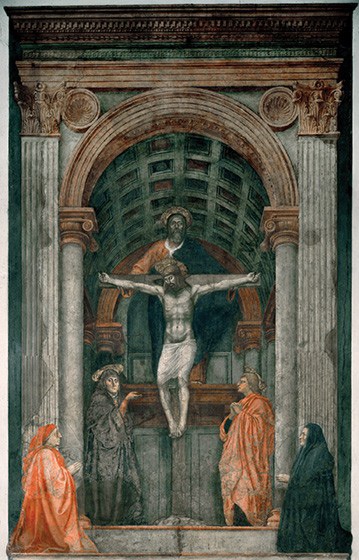
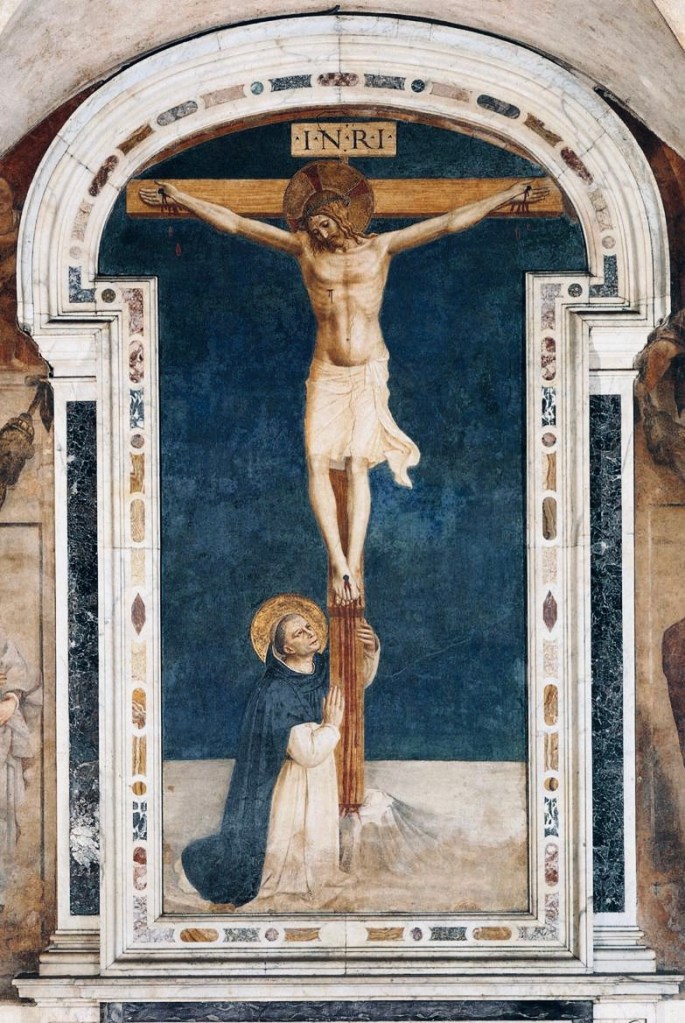
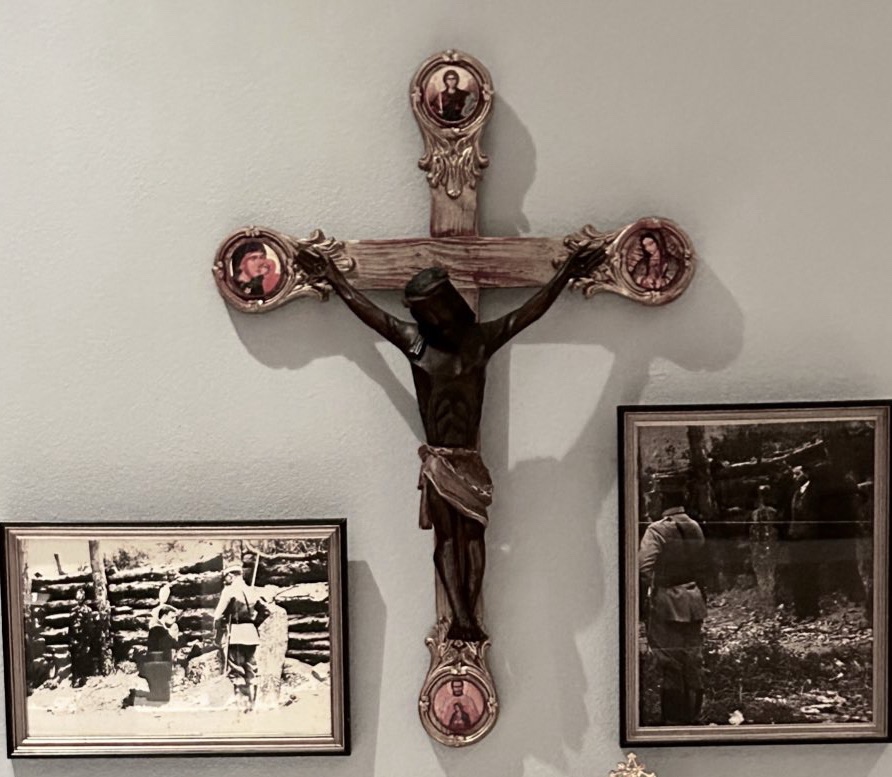
 Words and Things