I gave this reflection on Pope Francis at Fordham University on March 13, 2025, about a month before the Holy Father died. I was part of a panel of theologians more distinguished than I. I publish it now, because it seems the right time. The occasion was an opportunity for me, briefly, to pull some things together from my mind and heart. I shall always be grateful to God for the gift of Pope Francis, and grateful to Pope Francis, for giving himself to us so completely until the end. Que en Paz descanse. +df
+++
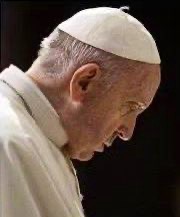
Fratelli Tutti and the Christian Humanism of Pope Francis
March 13, 2025
If I should ever have a quiet moment with the Holy Father, Pope Francis, I would ask him what it was like to converse with Borges. We know of the Holy Father’s love for literature and poetry. It is for him a quintessential sign of the inherent creativity that is ours by virtue of having been created in the image and likeness of God, created by the Father, through The Word, in the Spirit. Hence, Francis invited Borges to give lectures to Jesuit scholastics. I would ask him what that was like.
There is a saying Attributed to Terence the Roman playwright: nihil humanum mihi alienum / nothing human is foreign to me. In some ways I think of Fratelli Tutti as Pope Francis’ continuation of the Christian apprehension and deepening of this saying, focusing our attention on the quality of our human relationality. And not just Fratelli Tutti, but it is a common thread throughout his writings, from Evangelium Gaudium, to Laudato si, to the recent encyclical Dilexit nos,
I think of the enormous effort Pope Francis has marshaled to articulate a Christian humanism for our time, taking into account how our greatest human gifts can become also the greatest threats to the authentically human. There are economic and dominational tendencies to manipulate the poor, creation, and human relation. There is a kind of rebirth of a social Darwinism that announces a future that belongs to the strong. And there are also technological sophistications that can mimic human creativity without ever having had the human experiences that can move us to set to words or to music what most affects us. The danger of the latter is that it makes us diminish the true gift of human experiences and embodied encounters, of our capacity to craft, in relation to others, through the crucible of life, not despite it.
In Fratelli tutti Pope Francis pleads that all persons be respected for the dignity that is theirs. And he never ceases to defend the dignity of the powerless, the disabled, the migrant, the unborn, the elderly, all of whom can be counted among the poor precisely because they are largely defenseless before the manipulations of the powerful. It is this manipulative capacity in us that stifles the agency of the poor, of their ability to speak and describe for themselves what moves and animates them. Their voices, speaking of their deepest hungers for themselves and their families, are not often heard, and when heard, not much respected. Few, very few, political or economic leaders take the time to talk to an immigrant family, to get to know them. For if they hear, they might have to rethink something, “lest they be converted and be saved”.
Thus, for Pope Francis, the Church cannot waver in hearing and knowing what the world largely does not want to see and hear. This is a basic element of our nihil humanun alíenum mihi. The human factor is always under quiet siege, but prophetically the Holy Father names how we can be our own worst enemies, and points us towards social friendship.
The narrative he speaks to us is the narrative of the poor Christ who gives us life through his vulnerability and willingness to bear what the poorest among us bear. Christ bears it in them. It is an evangelical narrative of human dignity rendered most intelligible by the Paschal Mystery: of the suffering and the death, of the Master who seeks the lost. We are the lost, he found us; and his finding makes us seekers of the vulnerable, or we risk losing our gift of ever having been found.
Human Communication is different now. This is a sign of our times. We are on the cusp of losing our ability to have a conversation. This is a self-inflicted dehumanization. The conversation is the building block of human communication, of the indispensable local narrative; the universal narrative of the Paschal mystery is embedded in the local narrative.
The narrative as the basis of human speech is in eclipse, and with it a basic element of human community. Byung-Chul Han speaks of this in his book “The Crisis of Narration” and it is addressed amply in the recent document of the DDF on Artificial Intelligence.
Our time is powerfully marked by communication strategies that eschew the narrative: the mind is often unknowingly conditioned to think of truth as data and catalogued information, calculated into algorithms that determine what we see and what the questions are, and what the conclusions are to the questions so generated.
The Paschal Narrative, and the clarity of its setting into relief the sources of our dignity, are not easily heard in this setting. We should not try to compete with a communication structure that is largely bought and paid for by the interests that engender their own validation by the the number of clicks they can proudly display.
So what can we we do? We must learn the discipline of participating in the algorithm dominated media, being present to it, without falling into its designs. This is not easy. But more than this we must recommit ourselves to the full narrative: The Narrative sets in relief what is important and what is not. Like the Passion narratives themselves, not everything is said, only what is essential for us to understand the meaning of the gift. When seen or heard the narrative speaks for itself by generating a resonance in the soul. The Paschal narrative is the source of contemplation, seeing ourselves and the world in its light.
Thus the witness to the narrative of Christ crucified and risen in our midst is the principal thing. Building communities of attentiveness and respect for people out of love for Christ is our principal way forward. This has always been our way forward. As the Argentinian, one time Jesuit, Leonardo Castellani put it: We are specialists in restorations and regenerations, which are actually accomplished by investing our own blood. We do this in the Spirit of the Christ, who as Juan de Ávila said, saves the world by shedding no one’s blood except his own.
The more our Catholic Charities or our work among the poor in drought stricken parts of Africa are derided as subversive, the more we have to keep doing what we do. We can defend effectively what we do in the public square, but only if we do not waver in doing what the Lord commanded us to do. The narrative resonates when it is manifested.
And this, at length, is one of the basic aims of synodality. The Holy Father points us to become more what we are, a community of respect for one another, in faith hope and charity, a community that has a heart for the weak and discarded. The world’s expendables. In this sense, rebuilding and regenerating parish communities where our people are capable of coming out of themselves to listen, to speak, laugh and cry as a people aware that our common dignity, is prior to our disagreements and differences. This may well be the most significant aspect of Synodal renewal. It is, as Dilexit nos teaches, a matter of the heart, open to others, willing to be wounded by love, as Christ was. This is the work of the Spirit.
This is the Christian humanism that goes beyond Terence, deepening without losing the prior noble intuition. This is what Pope Francis has been saying to us in so many different ways, and by so many of his prophetic actions. We are meant to be bearers of the narrative, ready to give a response when asked: “by what authority do you do these things?”.
+df
~~~
Leonardo Castellani:
Nosotros somos especialistas en restauraciones y regeneraciones; las cuales en efecto se hacen con sangre propia:
San Juan de Ávila:
ha conquistado los corazones; no matando, sino muriendo; no derramando sangre ajena, sino la suya propria por todos en la cruz.
(He has conquered hearts; not by killing, but by dying; not by shedding the blood of others, but his own blood for all on the cross.)
 Words and Things
Borges es de mis autores favoritos.
Me gustaMe gusta