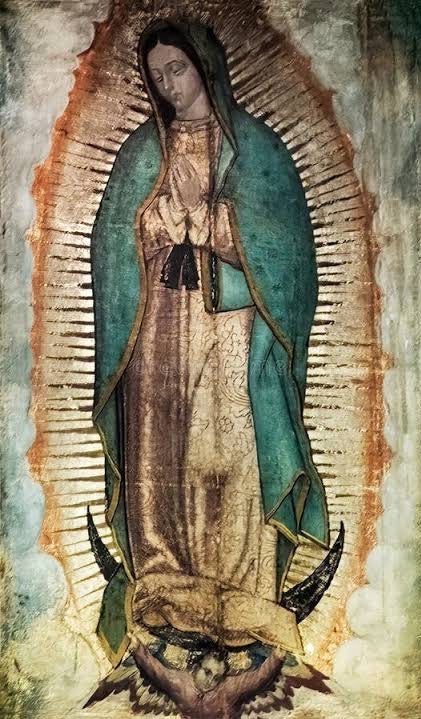
La Virgen ve al mundo y a la Iglesia con ojos de ternura, con aquella mirada que reconoce y llama a la dignidad de los hijos de Dios,
porque por ser portadora de la humanidad de Dios hacia la humanidad, está concretamente saturada de la gracia del Hijo;
y gracias a esta condición de “llena de gracia / Madre de Dios”, anuncia e invita a quienes mira a compartir la mirada / perspectiva del Dios victorioso en ella;
y por esta misma razón porta en su persona la figura de la Iglesia, la asamblea de los que reciben la novedad de esta gracia,
y por consecuencia, comparten la ternura de aquella su mirada como Madre de gracia, Madre de misericordia.
+++
The Virgin looks upon the world and the Church with eyes of tenderness,
with that gaze which recognizes and calls forth the dignity of the children of God
because, as the bearer of God’s own humanity to humanity, she is concretely saturated with the grace of the Son;
and by virtue of this state of being «full of grace / Mother of God,» she announces to and invites those she beholds to share in the gaze / perspective of the God who is victorious within her;
for this same reason, she carries in her person the figure of the Church,
the assembly of those who receive the newness of this grace and,
consequently, share in the tenderness of this her gaze as Mother of grace and Mother of mercy.
+df
Addendum:
St Thomas On Psalm 44: the Church and the Blessed Virgin
Commenting on Psalm 44,10ff St Thomas explains the verses on the Queen “standing at his right hand” in a primarily ecclesiological sense: Sponsa Christi est Ecclesia etc. After exposing the sense of the text in that light he adds the following about the Blessed Virgin:
Et potest exponi totum hoc de beata virgine, quae regina et mater regis est, quae astat super omnes choros in vestitu deaurato, idest deaurata divinitate: non quod sit Deus, sed quia est mater Dei.
“And all of this can be explicated about the Blessed Virgin, who is the queen and mother of the king, who stands above all the choirs [of angels] in a gilded garment, that is, gilded with divinity: not because she is God, but because she is the mother of God.”
«Y todo esto puede ser explicado con referencia a la Santísima Virgen, quien es reina y madre del Rey, y que se alza por encima de todos los coros [de ángeles] vestida con un manto de oro —es decir, dorado por la divinidad—: no porque ella sea Dios, sino porque ella es la Madre de Dios».
+df

